Webinar Summary
- Explore distinct in vitro screening techniques for evaluating the safety of emerging inhaled products, facilitating early and informed decisions in compound selection and development.
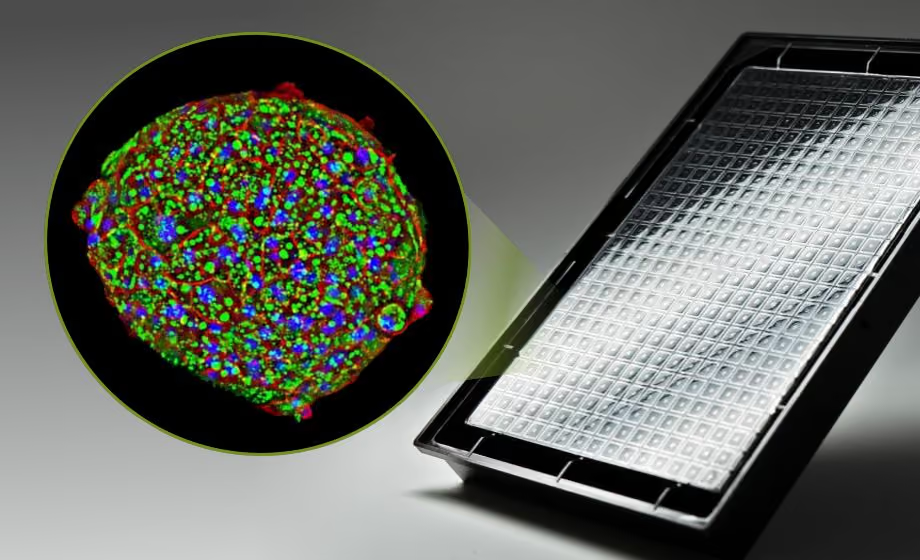
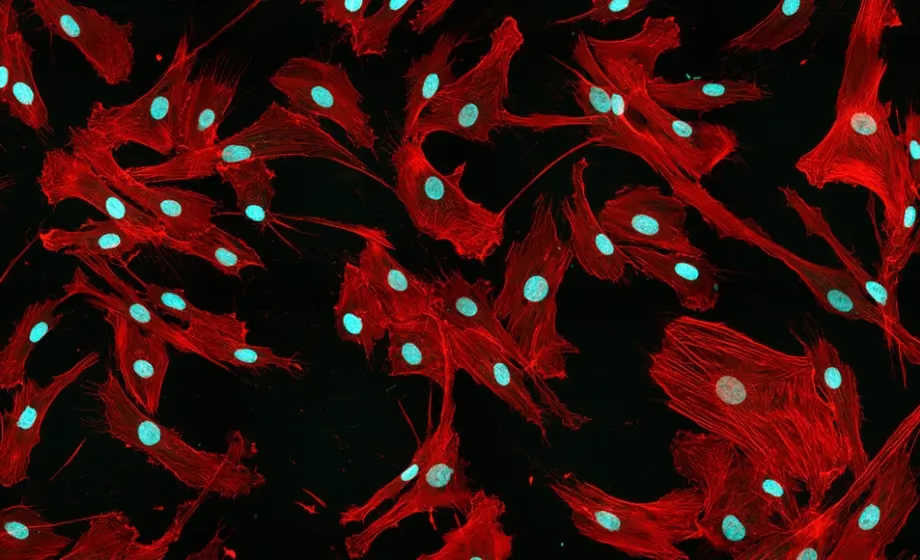
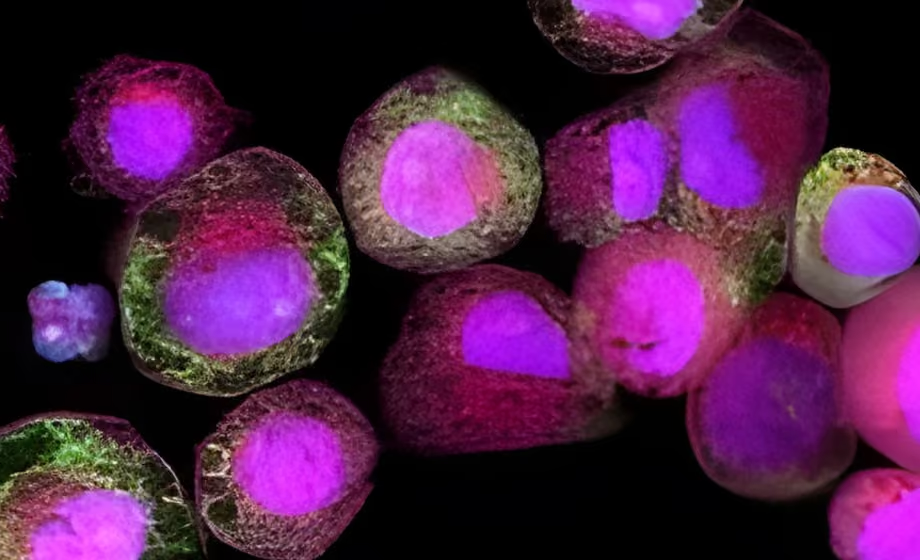
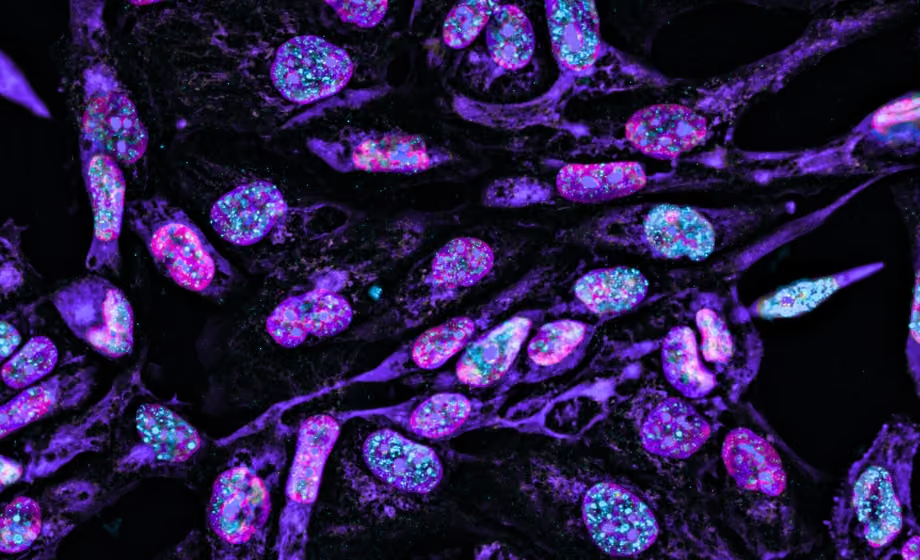
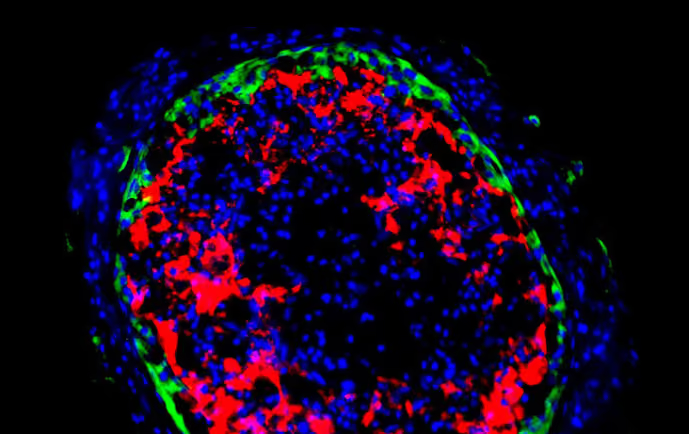
- How high-content image analysis (HCIA) cell painting assays can be used as a forward-looking high-throughput screening tool, distinguishing unique response patterns in alveolar macrophages.
- Understand the use of the ImmuPHAGE and ImmuLUNG models  in conducting customized evaluations focused on inhalation safety.
Safety concerns play a significant role in the unsuccessful progression of candidate compounds in the later stages of drug development. Establishing the connection between in vitro endpoints and human health outcomes is essential.
In this webinar, Prof. Victoria Hutter and Dr. Louis Scott present a novel tool for in vitro safety assessment in drug development. The morph_ONE assay provides a human-centric approach to potentially fill specific regulatory gaps concerning safety issues. This tool is capable of profiling both human and rat alveolar macrophages, offering valuable insights for hazard identification and toxicity assessments. By bridging the divide between cellular effects and overall risk, it has the potential to enhance our understanding of safety-related aspects in drug development.
Featuring Insights from
Victoria Hutter
PhD
Victoria Hutter is Chief Scientific Officer at ImmuONE, a contract research organisation specializing in in vitro toxicology solutions for the inhaled products industries. She is also Professor of in vitro toxicology at the University of Hertfordshire. Victoria and her team develop new models and assessment methodologies for inhaled toxicology with a focus on the inflammatory responses of the respiratory airways and alveoli.
Louis Scott
PhD
Louis Scott is the Commercial Lead in Immunology at ImmuONE. Louis joined ImmuONE as he believed that there was a need for robust, animal-free, and human-relevant models in toxicity testing. Being an immunologist by trade, he advocates exploring the modulation of tissue-resident immune cell biology to better understand the intricate ways in which inhaled compounds affect our lungs. Louis is devoted to supporting client needs and helping design effective study approaches. In his role at ImmuONE, he enjoys the privilege of meeting researchers and clients from around the world, gaining insights into their unique requirements and challenges.
Sponsored by
ImmuONE Limited
In Partnership with

Scientist.com
Scientist.com is the world’s largest and first platform built for the intricacies of scientific outsourcing.
We help pharmaceutical and biotechnology organizations discover, engage, manage, and scale relationships with the providers that support every stage of the pipeline—from discovery and preclinical research to clinical development, manufacturing, medical affairs, and commercialization. Through a centralized platform, organizations can access a global network of 6,000+ providers, streamline sourcing and procurement workflows, maintain compliance, manage supplier relationships, and leverage data-driven insights to make faster, more informed decisions.
Today, Scientist.com supports more than 130 life science organizations, including 24 of the world's top 30 pharmaceutical companies, helping teams reduce operational complexity, accelerate timelines, and bring innovations to patients faster. Our mission is to make it possible to cure all human disease by 2050.





.avif)