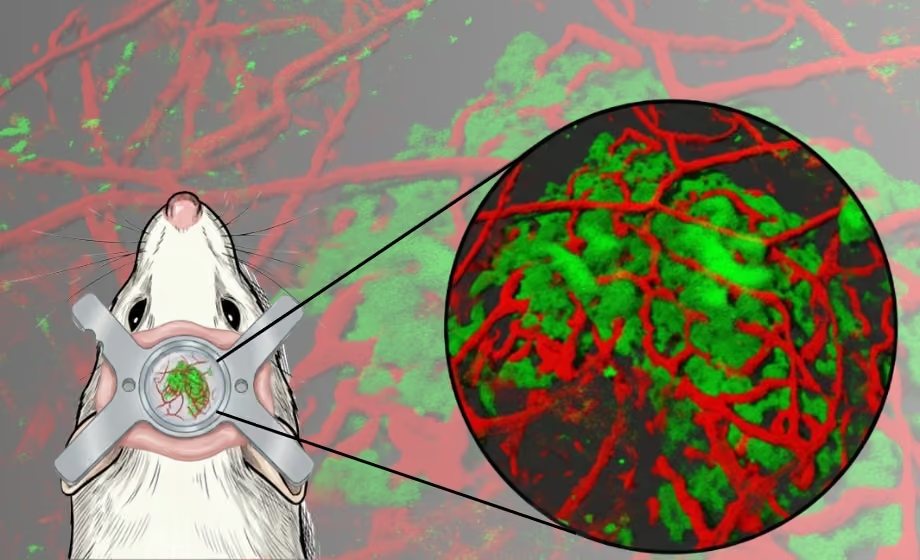
The must-watch webinar for researchers interested in optical and electrophysiological recordings from the brain of head-fixed but otherwise freely moving rodents.
The must-watch webinar for researchers interested in optical and electrophysiological recordings from the brain of head-fixed but otherwise freely moving rodents.
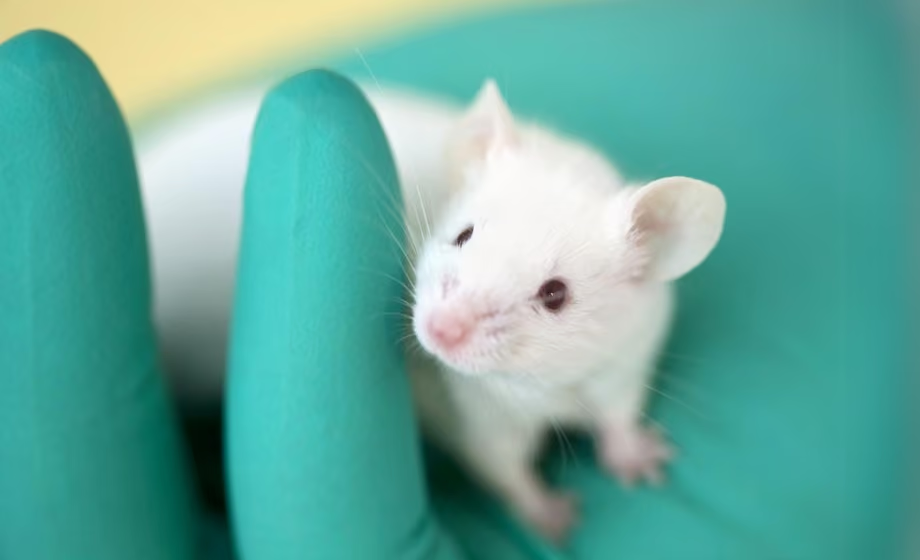
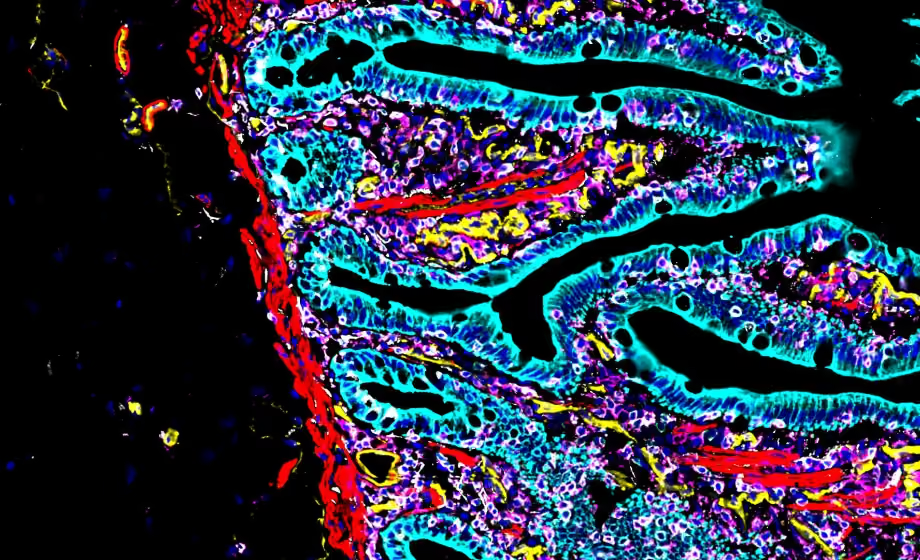
A growing number of researchers are moving from reduced preparations such as dissociated cultured neurons or brain slices, to experimentation in live animals - in vivo - using advanced methods such as two-photon microscopy or combined optogenetics and patch-clamp recordings. In order to immobilize the animal during these challenging applications general anesthesia is often administered; however, the use of anesthetics greatly distorts brain function.Is there a better way?
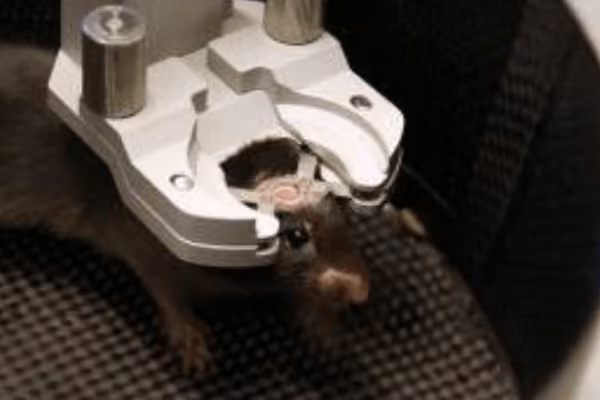
In this exclusive webinar sponsored by Neurotar Ltd., leading experts in the technology discuss methodology, best-practices and show attendees how to immobilize the rodent's head without restraining its body using the Mobile HomeCage. The result is a controlled research environment for studying brain function in awake, freely-moving subjects with no stress to the animal. Discussion around how this technique can be applied to the study of neuronal plasticity, neurodegeneration, addiction, brain trauma and other pathophysiological conditions in longitudinal experiments was included.
Featuring Insights from

Eero Castren
MD PhD

Roustem Khazipov
MD, PhD

Petri Hyytia
PhD
Leonard Khiroug
PhD
Sponsored by