In this webinar, Marta Walasek, PhD, and Danielle Nguyen Truong, BSc, provide an overview of hematopoietic stem and progenitor cells (HSPCs) and CRISPR-Cas9 genome editing, and define optimal culture conditions for an efficient genome editing workflow.
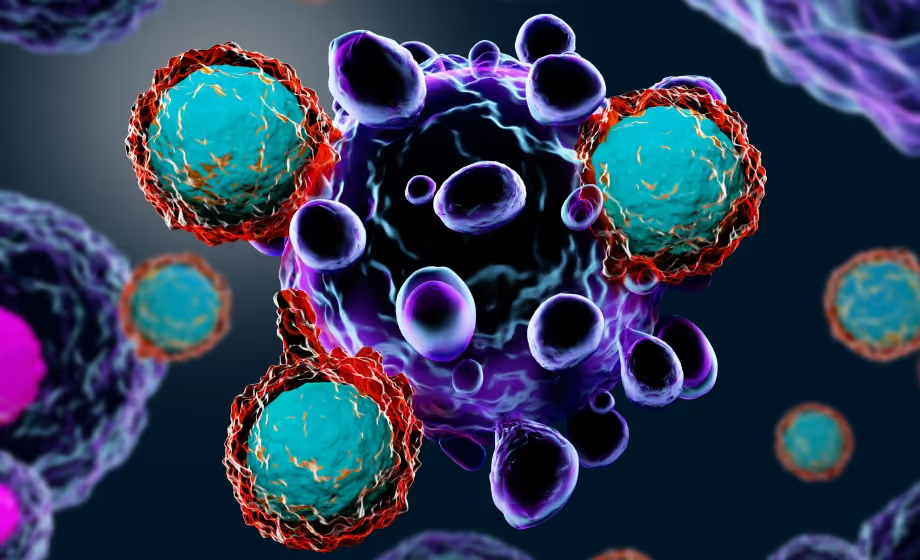
To begin this webinar, Marta provides an overview of hematopoietic stem and progenitor cells (HSPCs) and their sources. Understanding the biology and requirements of a target cell type is critical for developing an optimized genome editing workflow since protocols vary according to application and cell type. Hematopoietic stem cells (HSCs) are capable of self-renewal, have multilineage differentiation potential, and exhibit cell cycle dormancy. In contrast, hematopoietic progenitor cells, which are generated during HSC differentiation, have limited self-renewal capabilities and are highly proliferative.
"Since the discovery of functionally-defined HSCs more than 60 years ago, significant progress has been made to identify and purify these cells."
Several landmark studies have identified surface markers that allow for the isolation of functionally-diverse stages of HSC development, including the CD34 marker. However, only approximately 1% of CD34+ cells are primitive long-term HSCs, so additional markers are required for primitive HSC identification. The most important determinant in stem cell characterization is their functional potential rather than their physical properties, which can be measured through various assays.
"To date, in vivo transplantation remains the only true HSC assay able to assess their hallmark features."
The applications of CD34+ cells are numerous, ranging from basic research (e.g., modeling normal and disease hematopoiesis) to preclinical research (e.g., drug development, toxicity studies). CD34+ cells are also clinically relevant, as HSC transplantation is a curative treatment for inherited and acquired blood disorders, with more than 50,000 procedures conducted annually worldwide. Advances in genome editing have the potential to extend HSC applications to an area of genetic, previously incurable diseases, which are highlighted in the presentation. Currently, gene therapy researchers are primarily focused on novel CRISPR-based editing approaches.
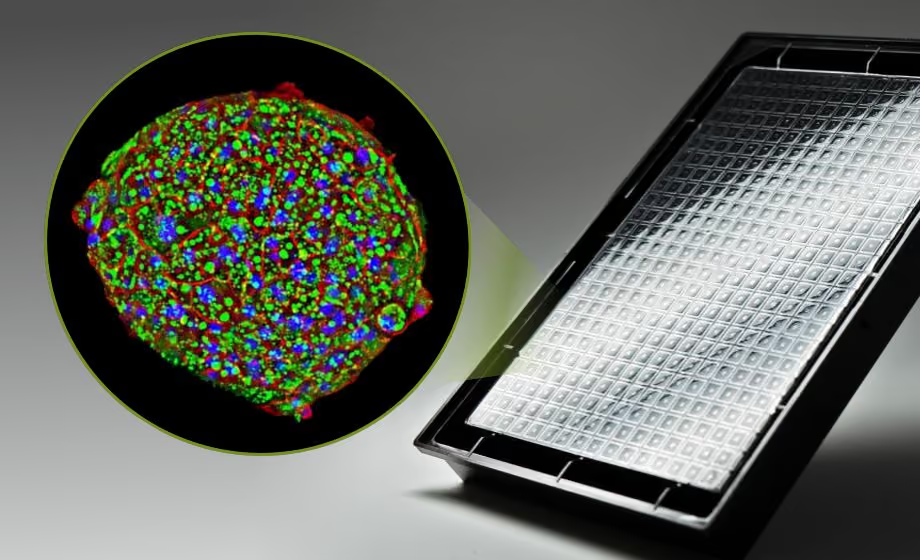
HSPCs can be collected from bone marrow, mobilized peripheral blood (mPB), and umbilical cord blood (CB), which vary in the number of CD34+ cells and recallability of a donor. The choice of the source therefore depends on the application and development stage. For example, mPB is the main source for autologous transplants as it provides the largest cell sample size, whereas CB provides a limited number of cells and is used in early stage research and workflow optimization. Several HSPC characteristics make them an attractive target for genome editing, including their ease of collection, capacity to home and engraft upon transplantation, and ability to survive in an ex vivo culture.
"Cell culture is one of the key steps in genome editing workflow optimization."
Next, Marta defines culture conditions for CD34+ cell editing, for which important considerations include how long to culture, how to minimize primitive cell loss, and how to assess whether edited cells remain functional. A successful genome editing workflow should result in gene-corrected HSCs that are capable of generating lifelong gene-corrected progeny, preserve stemness, and allow for efficient editing. Efficient HSC gene editing requires cell pre-activation to exit quiescence, and so primitive stem cells may require longer stimulation compared to progenitor cells. However, extended ex vivo culture is associated with the loss of HSC stemness and impairment of long-term engraftment capacity.
"Therefore, optimization of culture protocols for CD34+ cell editing and monitoring the frequency of primitive cells in the final sample are critical."
More than 30 years of research has focused on defining culture conditions for optimal HSPC proliferation and expansion. Ex vivo HSC activation can be achieved with early-acting cytokines, but these conditions result in gradual differentiation. More recently, small molecule compounds have shown to stimulate their self-renewal and delay their differentiation in culture. The supplementation of culture media with a "cocktail" of early-acting cytokines and small molecules helps maintain the long-term multilineage population capacity of human HSCs. Despite these advances, cell culture is still associated with a gradual loss of primitive cells, and so optimal culture duration is a balance between efficient gene editing and loss of HSCs.
Marta provides data from a few studies that describe critical culture parameters to reproducibly achieve high editing frequencies. With these parameters in mind, she provides a walkthrough of the methods and protocols used at STEMCELL Technologies to optimize and validate culture conditions for CD34+ genome editing workflows using CRISPR-Cas-9 technology. Marta also describes the tools that are available from STEMCELL Technologies for ex vivo CD34+ cell culture in genome editing protocols and highlights the benefits of using StemSpan products.
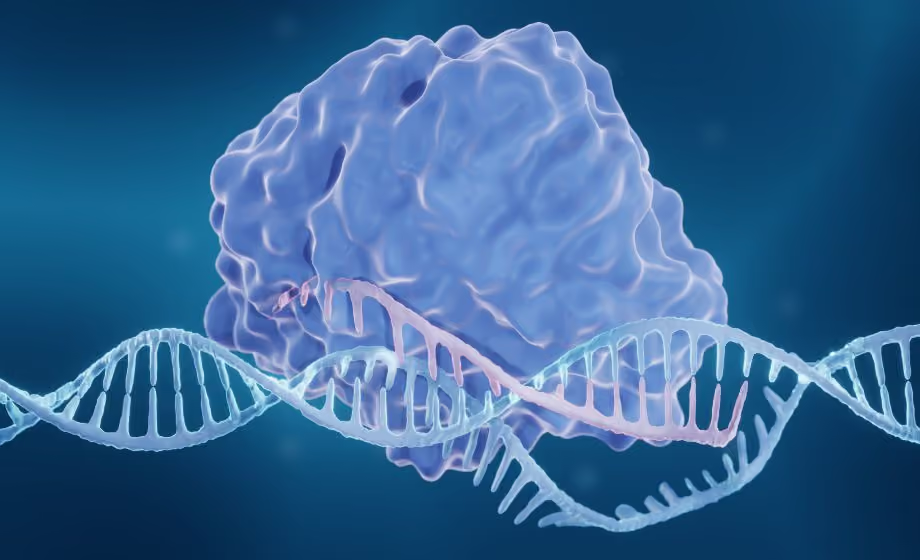
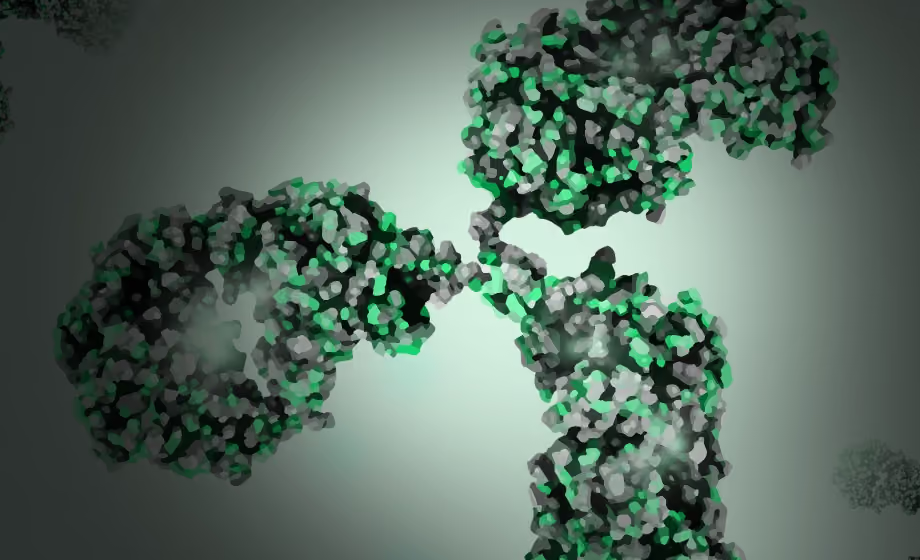
In the final portion of this webinar, Danielle describes genome editing of CD34+ using CRISPR-Cas9 technology in detail. Genome editing involves the deletion, insertion, or modification of the genome at a specific site in a DNA sequence, and the development of CRISPR-Cas9 has allowed for user-friendly, rapid, flexible, and cost-effective genetic alterations. In addition to the challenges in HSPC genome editing that were previously described, there are also issues in the expression and delivery of CRISPR components, as well as off-target effects.
"There are a few different methods to express CRISPR/Cas9 components in cells; this is critical as the CRISPR/Cas9 system doesn't naturally occur in mammalian cells."
In particular, the ribonucleoprotein (RNP) system is the most efficient delivery method since no molecular cloning is required, it is more stable than messenger RNA-based systems, and can immediately enter the nucleus for editing. Furthermore, it is the safest method of delivery as there is no change of plasmid integration, it does not induce a cellular immune response, and it results in decreased off-target effects.
"We have developed a fully integrated workflow for high efficiency genome editing of CD34+ cells."
Lastly, Danielle describes different guide RNA formats and how they can impact editing efficiency, methods for delivering cargo into cells, and popular strategies for evaluating genome editing. Danielle also provides data from CD45 and B2M knockout case studies for validating the optimal protocol for genome editing CD34+ cells using StemSpan and the ArciTect CRISPR-Cas9 system. In conclusion, key considerations for optimal genome editing workflow include cell types, culture conditions, and editing parameters; the CRISPR-Cas9 RNP system for editing primary cell types is the most efficient and least likely to lead to off-target effects. The robust media available from STEMCELL Technologies supports post-editing cell survival, expansion, and stemness.
Webinar Highlights
- An overview of HSPCs, their sources, and applications
- Culture conditions for HSPC editing
- Genome editing workflow optimization
- STEMCELL Technology products for genome editing experiments
- A deep dive into CRISPR-Cas9 technology for genome editing
Featuring Insights from

Marta Walasek
PhD
Dr. Marta Walasek is a Senior Scientist in the Hematology department at STEMCELL Technologies. She has over 10 years of experience in the field of hematopoiesis and stem cell biology. Marta’s work focuses on the development of products for hematopoietic stem and progenitor cell expansion, differentiation and readout.

Danielle Nguyen Truong
BSc
Danielle Truong is a Technical Scientist in the Business Operations department at STEMCELL Technologies. She has over 12 years experience in the field of molecular biology and genome editing. Danielle’s work focuses on protocol development of genome editing on a variety of cell types including stem and primary cells using STEMCELL ArciTectTM CRISPR-Cas system.
Sponsored by
STEMCELL Technologies Inc.
In Partnership with

Scientist.com
Scientist.com is the world’s largest and first platform built for the intricacies of scientific outsourcing.
We help pharmaceutical and biotechnology organizations discover, engage, manage, and scale relationships with the providers that support every stage of the pipeline—from discovery and preclinical research to clinical development, manufacturing, medical affairs, and commercialization. Through a centralized platform, organizations can access a global network of 6,000+ providers, streamline sourcing and procurement workflows, maintain compliance, manage supplier relationships, and leverage data-driven insights to make faster, more informed decisions.
Today, Scientist.com supports more than 130 life science organizations, including 24 of the world's top 30 pharmaceutical companies, helping teams reduce operational complexity, accelerate timelines, and bring innovations to patients faster. Our mission is to make it possible to cure all human disease by 2050.
















.avif)