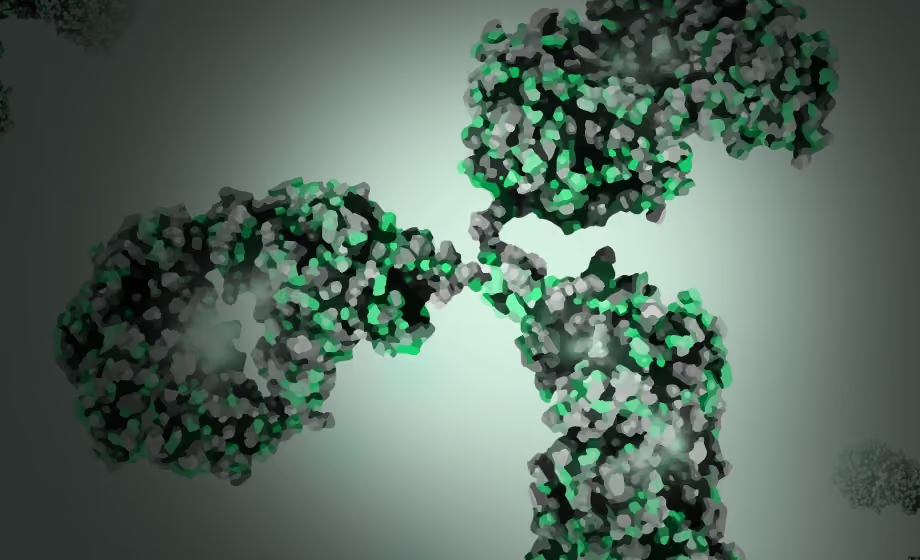
In this webinar, Yuning Chen, PhD, from Sino Biological provides an introduction to antibodies, discusses strategies for recombinant antibody expression, and highlights a novel antibody expression platform that facilitates antibody library generation.
To begin this webinar, Dr. Chen provides a brief overview of Sino Biological, which is headquartered in Beijing, China, but has a global presence. Sino Biological's core business involves reagents, including proteins, antibodies, and assay kits, as well as custom services like recombinant expression and antibody development.
"We have created a significant library of these biochemical reagents to facilitate biomedical research as well as drug development."
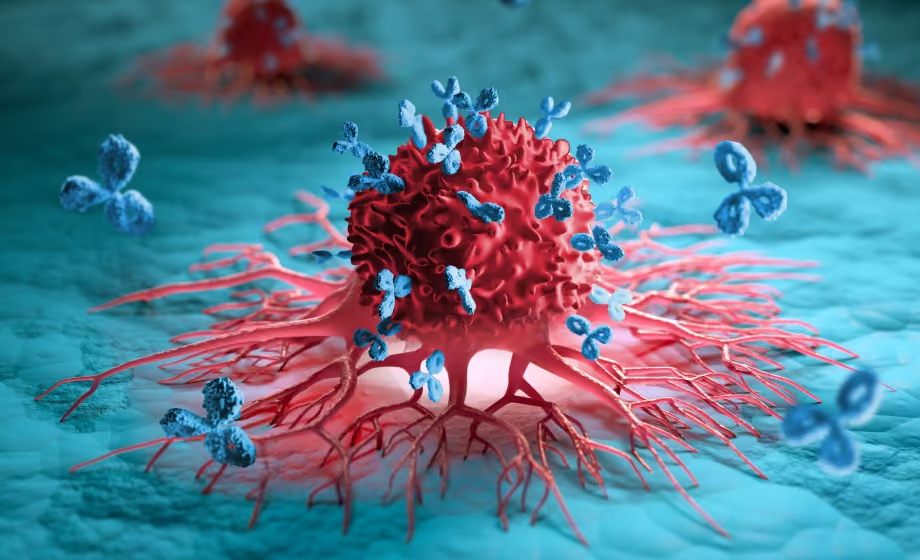
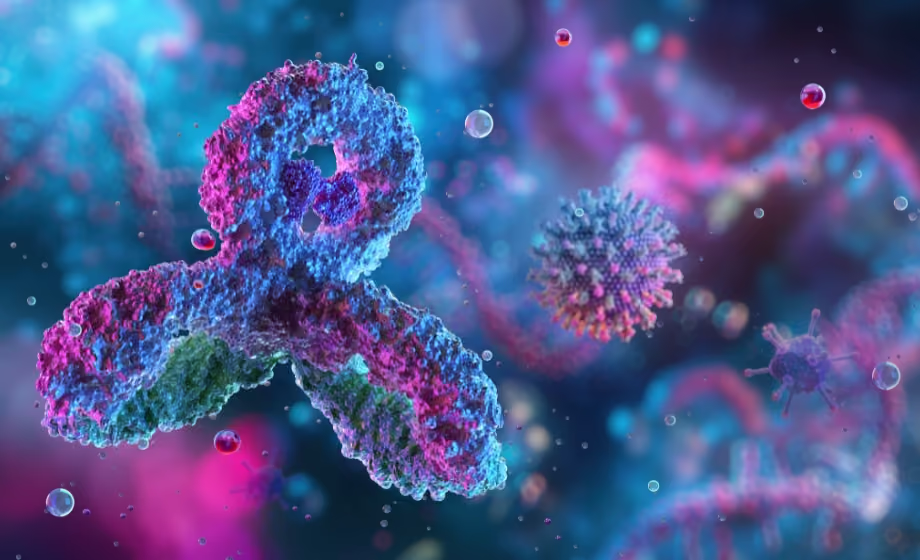
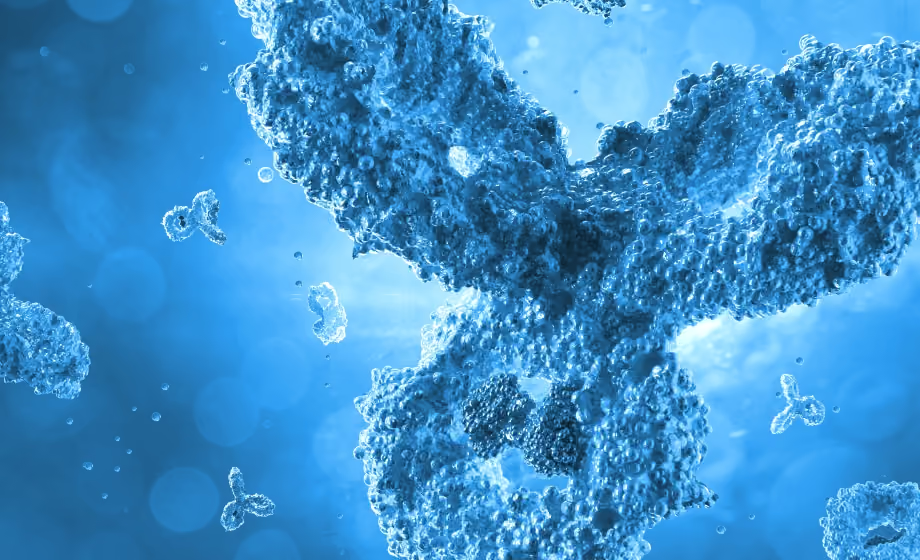
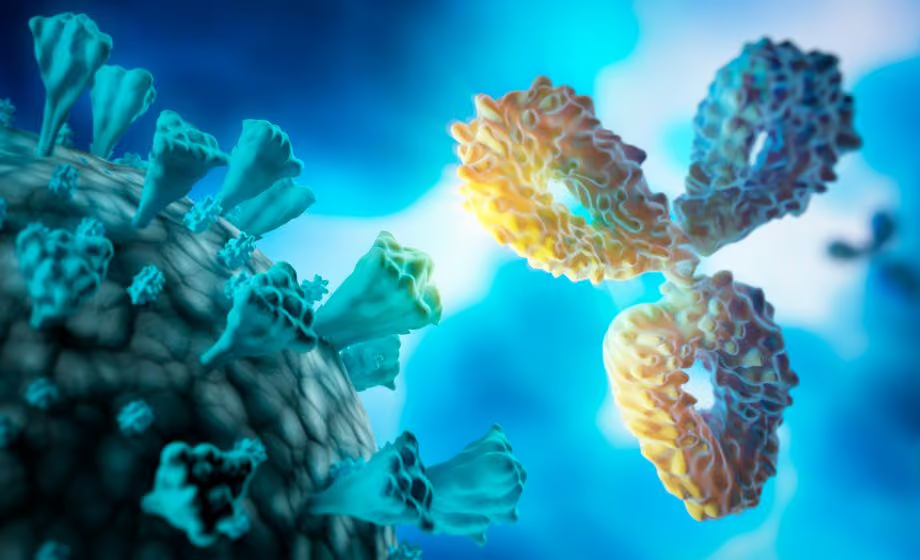
Dr. Chen next provides an introduction to antibodies and delves into strategies for their production. Antibodies are secreted by mature B cells and circulate in the bloodstream; since they react with antigens with high specificity and affinity, they are a foundation of modern biopharmaceuticals. Five subclasses of antibodies, mainly categorized by the chemical nature of their heavy chain, can be found in human blood circulation. Immunoglobulin G (IgG) is the most abundant circulating antibody, and can be further characterized by the sequence of its constant region as well as the length of its hinge region.
Although immunology and antibodies have been around since the 1700s, the field experienced an exponential growth beginning in 1975 with the emergence of hybridoma technology. Since then, a plethora of antibodies have been added to the arsenal to fight cancer, infectious diseases, and autoimmune disorders. To date, more than 135 antibody therapeutics have been approved or are in regulatory review; among these, several are a top 10 drug in terms of their 2019 global sales.
"Antibody development is not only a technological challenge, but also a highly rewarding business. … I think that's why a lot of big pharmaceutical companies are invested heavily in this field."
One of the most important regions of an antibody is its variable region, which is comprised of complementarity-determining regions that form a paratope and interact with antigen epitopes. The Fc domain of an antibody, meanwhile, is responsible for its biological functions.
"Everything … starts with a sequence of the variable regions. Once you have that, [you] can do a lot of engineering and … convert a full-length IgG into different formats."
The most common formats of recombinant antibodies are fragmented antibodies, chimeric antibodies, antibody fusion proteins, and bi-specific antibodies. Notably, scientists at Sino Biological have encountered several formats of bi-specific antibodies over the years while working with clients, and a comprehensive review can be found here.
Recombinant antibody expression generally involves inserting a target gene that encodes the desired antibody into an expression vector, then transferring these vectors into a host cell via polyethylenimine-mediated transfection. Cells harboring the expression vectors are cultured on different scales, depending on project needs. Following purification, their activities are assessed by various tests.
"The selection of a suitable host will largely impact the success of your recombinant … protein or antibody expression project."
Dr. Chen next highlights key methods for antibody modification or optimization. Functionality can be modulated through signal peptides, linkers, purification tags, accessories, and glycans. Stability can also be enhanced through Fc modifications; for example, antibody stability has been improved by various research groups through system mutations, hinge region mutations, and the introduction of cysteine pairs in the Fc region. The choice of expression vectors and transfection reagents will also greatly impact the project's success.
Culture conditions can also be modified to optimize antibody expression. While culture media plays an important role in this process, other parameters like duration, temperature, and additives can be adjusted to increase yield and reduce aggregation and degradation; Dr. Chen highlights a recent study conducted by Sino Biological to further illustrate this. Although antibodies are easy to work with due to their affinity tags, additional purification steps are sometimes required to refine their quality.
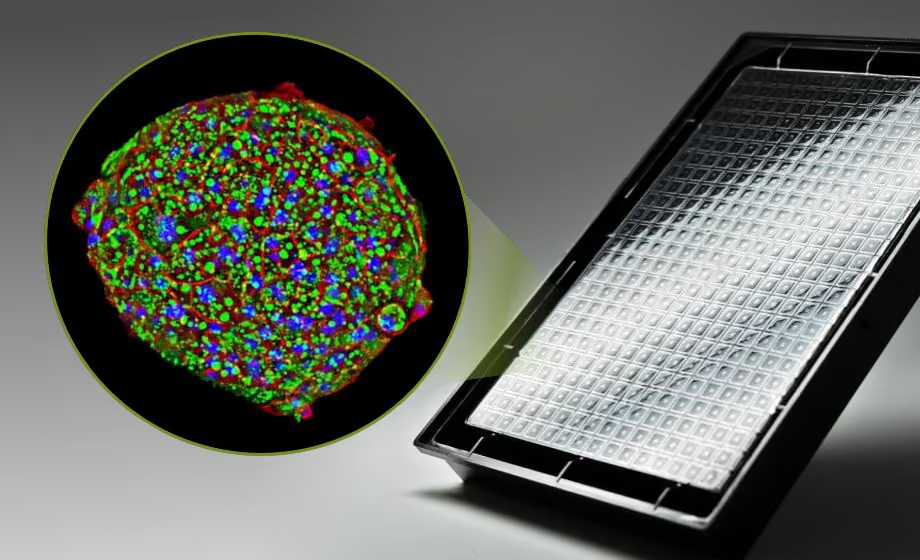
Lastly, Dr. Chen provides a brief overview of Sino Biologicals high-throughput antibody expression platform, which has been shown to be quite robust and efficient in producing various types of antibodies. In this process, primers are designed according to antibody sequences collected from clients, and these designs are subjected to high-throughput vector synthesis. Vectors are then transfected into a HEK293 cell culture in a shaker flask, after which they are purified in one step using an affinity column. With this method, Sino Biological can typically achieve up to 90% purity. The resulting antibodies are then functionally validated, and those with desired functionalities are selected for large-scale production.
"We have performed … several projects using this platform and we have generated over … 6000 antibodies to this day."
Dr. Chen also highlights two case studies that employed this platform. Notably, Sino Biological helped a research group create a library of antibodies against COVID-19. Approximately 600 antibodies were expressed with this platform, from which collaborators identified 14 neutralizing antibodies. After production was scaled up, the antibodies were eventually used in animal studies that have been recently published.
In summary, antibodies are essential molecules with versatile functions, and are therefore widely used in life science research and therapeutics. Antibodies can be derived from various methods, and their large-scale production is achieved via recombinant expression, which was the focus of this webinar. Recombinant antibody expression can be optimized at various steps, from initial construct design to culture methods and purification strategies. Sino Biological also hopes to use their high-throughput platform more frequently in the future to help clients create their antibody libraries.
Webinar Highlights
- An overview of Sino Biological
- Introduction to antibodies and their derivatives
- Strategies for recombinant antibody expression
- An overview of a novel high-throughput antibody expression platform
Featuring Insights from

Yuning Chen
PhD
Dr. Yuning Chen received his Ph.D. in protein biochemistry from Ohio University in 2012 and completed his post-doctoral studies in protein biochemistry and biophysics from the Pennsylvania State University in 2016. Dr. Chen is highly skilled in recombinant protein expression using multiple host systems (E.coli, BEVS, HEK293…), protein purification, and biochemical characterization. He currently holds the position of R&D Manager at Sino Biological, Inc. and is responsible for the design of novel recombinant protein products and platform optimization.
Sponsored by
Sino Biological Inc.
In Partnership with

Scientist.com
Scientist.com is the world’s largest and first platform built for the intricacies of scientific outsourcing.
We help pharmaceutical and biotechnology organizations discover, engage, manage, and scale relationships with the providers that support every stage of the pipeline—from discovery and preclinical research to clinical development, manufacturing, medical affairs, and commercialization. Through a centralized platform, organizations can access a global network of 6,000+ providers, streamline sourcing and procurement workflows, maintain compliance, manage supplier relationships, and leverage data-driven insights to make faster, more informed decisions.
Today, Scientist.com supports more than 130 life science organizations, including 24 of the world's top 30 pharmaceutical companies, helping teams reduce operational complexity, accelerate timelines, and bring innovations to patients faster. Our mission is to make it possible to cure all human disease by 2050.












.avif)


.avif)