Webinar Summary
- Impact of the brain tumor microenvironment on immune cells
- The role of macrophages in tumor immunosuppression
- How tissue remodeling could enhance anti-tumor immunity in brain cancer
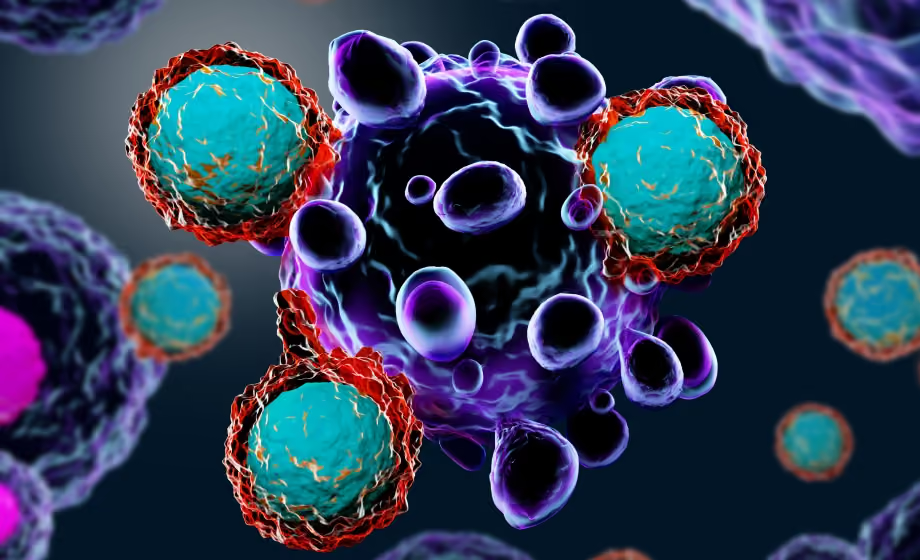
Achieving effective and sustainable anti-tumor immunity remains a significant challenge in cancer therapy, largely due to tumor immunosuppression. This is particularly pronounced in brain tumors, which create one of the most immunosuppressive tumor microenvironments. A key player in this process are macrophages, which can shift between a pro-inflammatory M1-like state and a pro-tumor M2-like state, contributing to the suppression of immune responses.
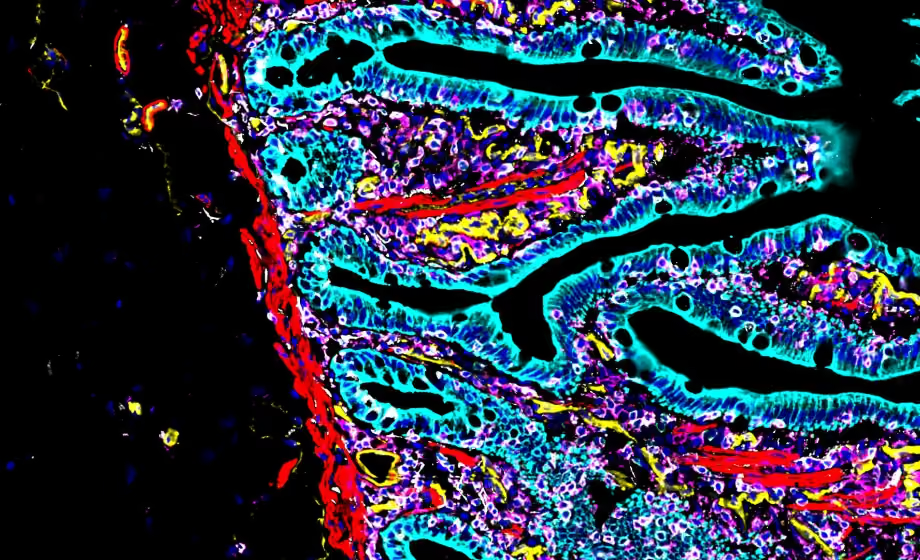
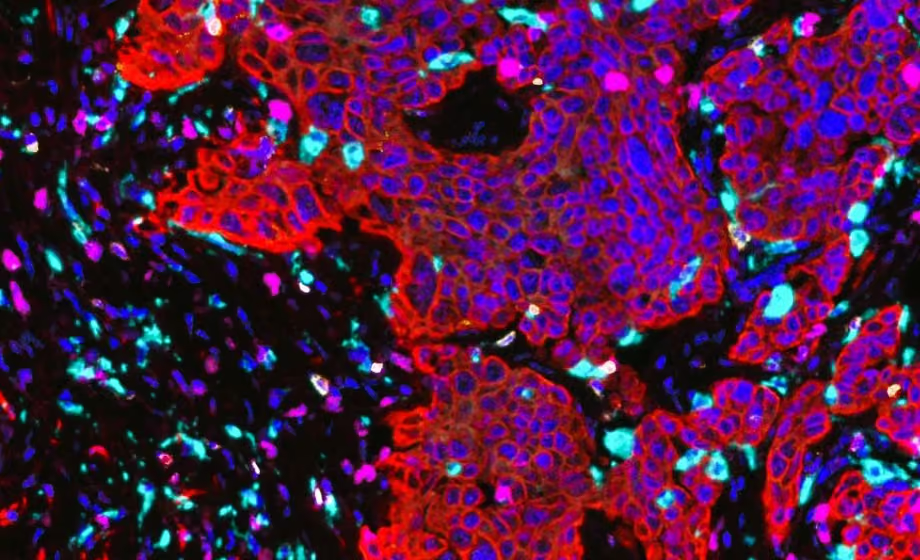
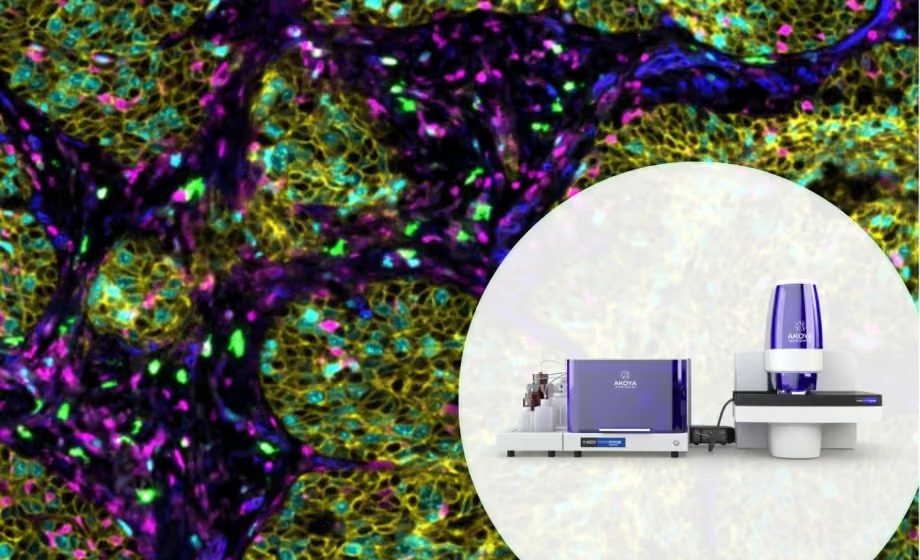
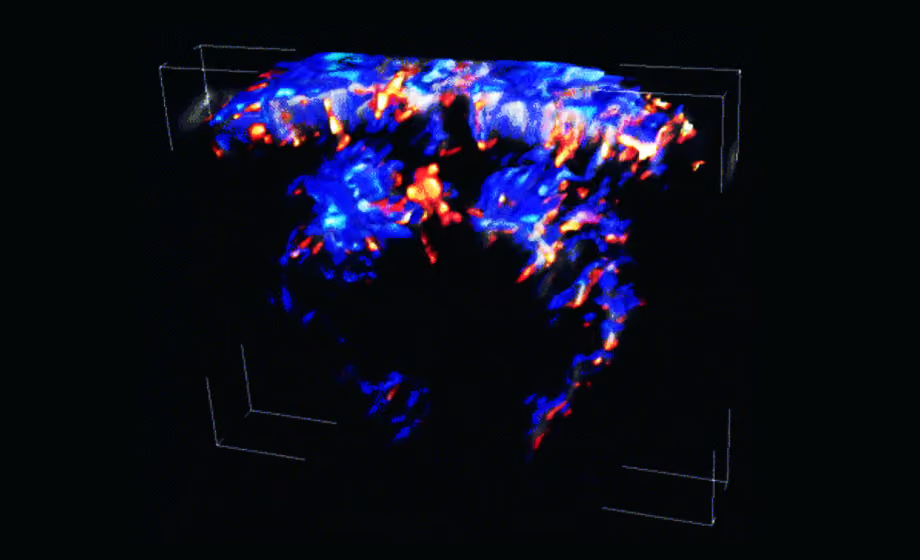
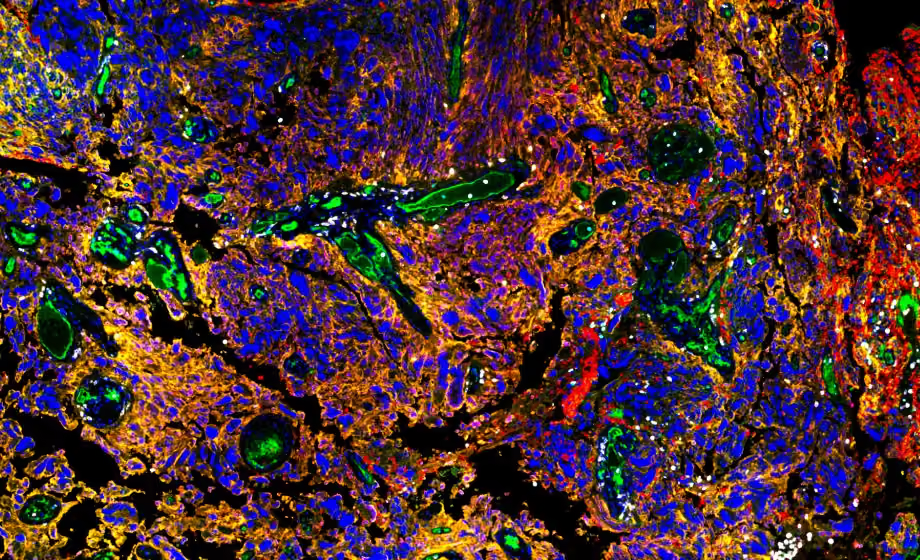
In this webinar, we present the latest research on reprogramming the brain tumor microenvironment to enhance anti-tumor immunity. Using advanced spatial tissue analysis combined with in vitro experiments, we will delve into the mechanisms regulating macrophage-dependent tumor immunosuppression in brain cancer. Our findings reveal that the spatial localization of macrophages within the tumor microenvironment influences their functional state, and that pathological tissue remodeling within perivascular niches impacts the activity of tumor-infiltrating lymphocytes.
Featuring Insights from
Theo Mantamadiotis
PhD
Theo is head of the Brain Cancer Biology & Tumour Microenvironment Laboratory, at The University of Melbourne. He completed his PhD at the Ludwig Institute for Cancer Research, then moved to the German Cancer Research Centre, Heidelberg, as a postdoctoral researcher where he generated various conditional mutant and Cre-recombinase transgenic mice targeting several regions in the brain. He then joined Rob Ramsay's laboratory at the Peter MacCallum Cancer, where he was the first to demonstrate that MYB has a critical role in brain development. He was a research academic for 3 years at Monash UniCam MIPS before undertaking a Marie Curie Fellowship for 3 years as a part of European Union Greek-German research program, at the University of Patras in Greece. In 2011 he returned to Melbourne and has been head of the Brain Cancer Biology & Tumour Microenvironment Laboratory since. Using cutting edge technology, his research aims to understand how CREB regulates brain tumour growth, and through the development of novel mouse brain tumour models, his laboratory has shown that the PI3K-CREB signalling-transcription axis regulates brain tumour cell proliferation and differentiation, and that targeting CREB attenuates malignancy. More recently, his laboratory has focussed on spatial mapping of the brain tumour microenvironment, investigating tumour remodelling and cell signalling heterogeneity.
Sponsored by

Akoya Biosciences
In Partnership with

Scientist.com
Scientist.com is the world’s largest and first platform built for the intricacies of scientific outsourcing.
We help pharmaceutical and biotechnology organizations discover, engage, manage, and scale relationships with the providers that support every stage of the pipeline—from discovery and preclinical research to clinical development, manufacturing, medical affairs, and commercialization. Through a centralized platform, organizations can access a global network of 6,000+ providers, streamline sourcing and procurement workflows, maintain compliance, manage supplier relationships, and leverage data-driven insights to make faster, more informed decisions.
Today, Scientist.com supports more than 130 life science organizations, including 24 of the world's top 30 pharmaceutical companies, helping teams reduce operational complexity, accelerate timelines, and bring innovations to patients faster. Our mission is to make it possible to cure all human disease by 2050.






.avif)