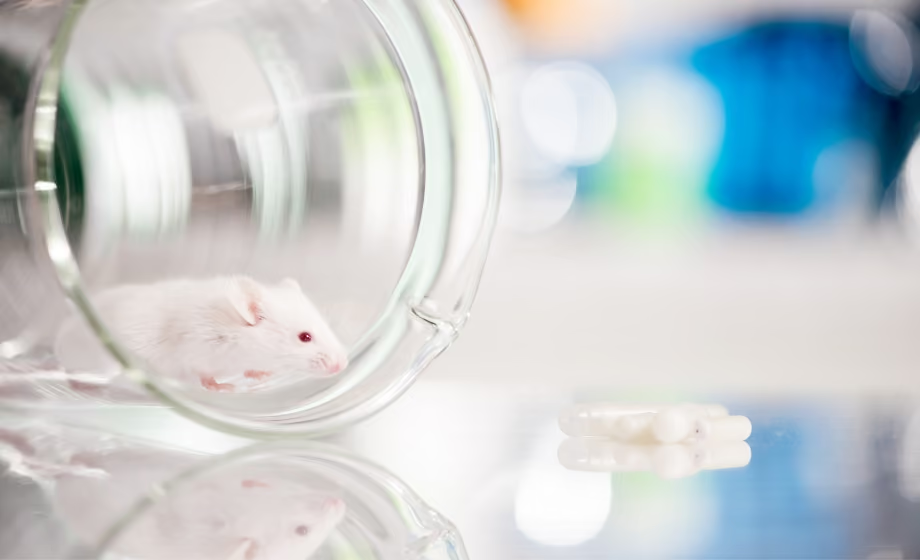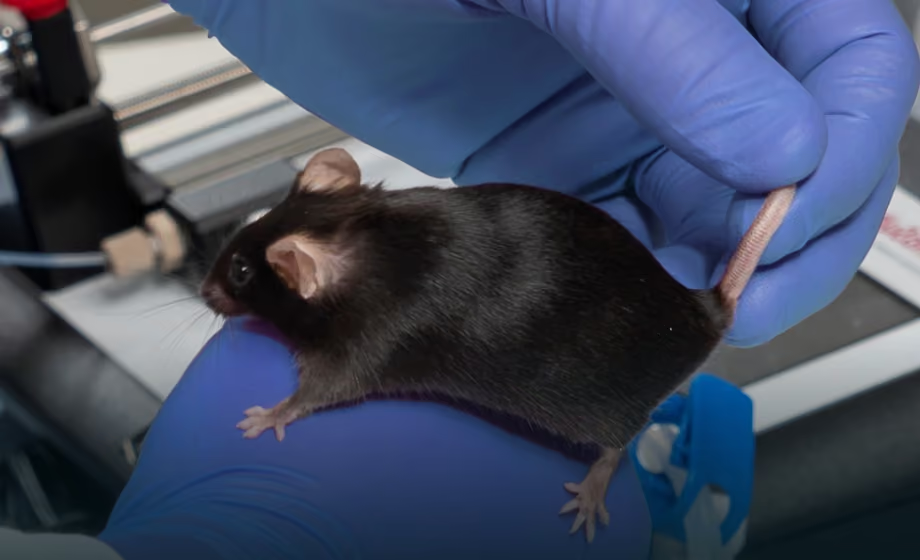
Dr. James Marx discusses improving the care and use of mice in biomedical research, with a focus on the pharmacology behind the effects of anesthetics on respiration.
Dr. Marx begins this webinar with an introduction to anesthetic monitoring in mammalian species. Although such monitoring provides valuable information on the animal's condition, in mice this tends to be limited and requires specialized equipment.
"Everything we described for the large animal anesthesia can be measured in the mouse, just it's much more difficult because of the small size of the mouse."
Dr. Marx emphasizes that monitoring the respiratory system is extremely important, noting that 50% of anesthetic deaths in humans are associated with hypoxia; all anesthetics depress respiration, resulting in a decreased ability to respond to hypoxia or hypercapnia.Respiratory monitoring can be achieved using pulse oximetry or measuring respiratory rate. Dr. Marx explains that the relationship between partial pressure of oxygen and hemoglobin saturation is not linear, which is why pulse oximetry is helpful in monitoring oxygen status in the mouse. Mechanisms of respiratory depression include: sensor depression, muscular activity inhibition, and atelectasis.
". . . there's been a couple studies showing that atelectasis is definitely occurring in our anesthetized mice, and it isn't just . . . during surgery . . . but atelectasis has been shown to be associated with an increase in inflammation after surgery."
Dr. Marx then discusses a study that revealed both inhaled isoflurane and injectable ketamine-xylazine dramatically decrease the response to carbon dioxide in mice. Further studies showed that when using a carrier gas of 21% oxygen, resulting pulse oximetry values averaged 79%. These extremely low hemoglobin saturation levels affect brain function, and even though the mice recover normally, this may have long-term effects on behavior.
Monitoring respiratory rate gives a good indication of when an animal is in distress. Therefore, understanding the anesthetic protocol, knowing the normal respiratory rate for your mice, and more frequent monitoring will result in lower mortality rates.
"If you're just looking at the mouse and monitoring continuously, but not taking the respiratory rate, you will not get this information."
Dr. Marx then provides an overview of the various anesthetic depths and how to confirm the animal is in an ideal plane of anesthesia by testing whether they respond to a noxious stimulus. Preferably, no voluntary movement is observed but an autonomic response is still present. He concludes the webinar highlighting other vital signs in addition to respiration to monitor and areas requiring further study, including whether providing 100% oxygen to the animal may result in oxygen toxicity.
Webinar Highlights
- Effects of anesthesia on respiration in mice
- Overview of methods to monitor anesthetized mice
- Observations and future research on monitoring beyond respiration
Featuring Insights from

James Marx
DVM, PhD
Dr. Marx received his DVM from Cornell University and his PhD from Penn State University. He is on the faculty at UPenn’s School of Veterinary Medicine. In addition to his clinical work, his research interest is in improving the care and welfare of mice used in biomedical research, with a special interest in anesthesia of the mouse.
Sponsored by

Kent Scientific Corporation
In Partnership with
Academy of Surgical Research
- Encourage, foster, promote, and advance professional and academic standards, education, research, and development in the arts and sciences of experimental surgery.
- Promote, initiate, support, and accomplish academic and practical educational programs, cooperative research, and development in experimental surgery in the public interest.
- Promote humane use and treatment of experimental animals and prevent their use when other means can bring about the same scientific results.
- Cooperate with medical organizations, other scientific organizations, government agencies, and other interested parties in establishing, reviewing, and evaluating ethics, theories, practices, and research pertaining to surgical research and promotion of the product of surgical research for clinical application.
- Encourage the advancement of the field of surgery in all aspects, including research, education, and critical promotion of research products for clinical applications.





























.avif)