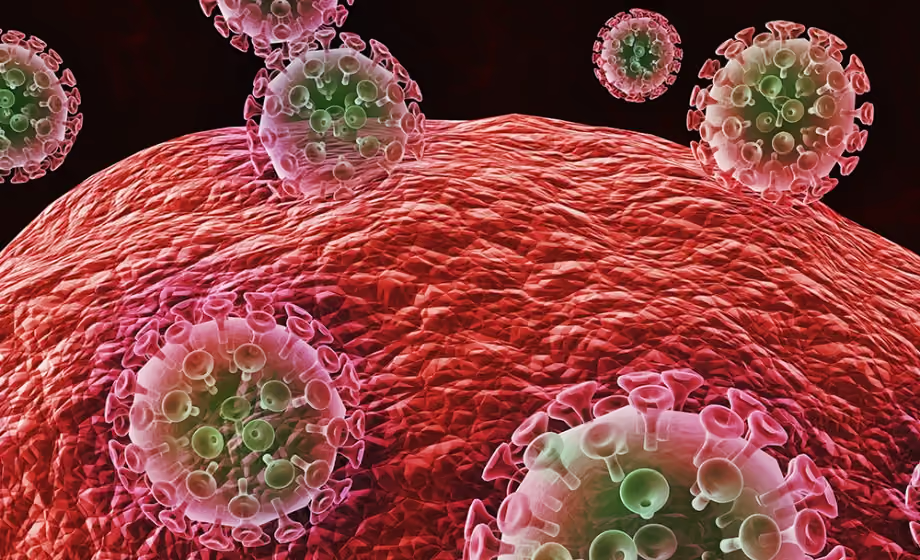
Get practical insight into CRISPR-Cas9 gene editing in primary immune cells and how it can be applied to study drug action in a physiologically relevant model.
Gene editing in primary human cells opens new possibilities for studying biological function and therapeutic mechanisms in a more physiologically relevant context, but technical challenges often limit its application. In this webinar, Dr. Judd Hultquist will walk through how his team used CRISPR-Cas9 and the Nucleofector Platform to successfully edit primary T cells. The session will provide practical guidance for researchers interested in applying gene editing to biological questions, particularly those related to host-pathogen interactions and therapeutic mechanisms.
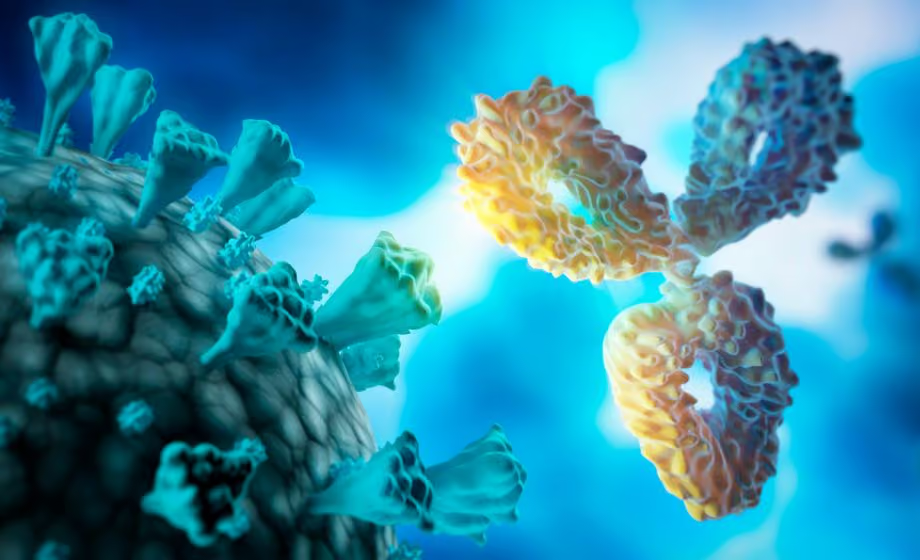
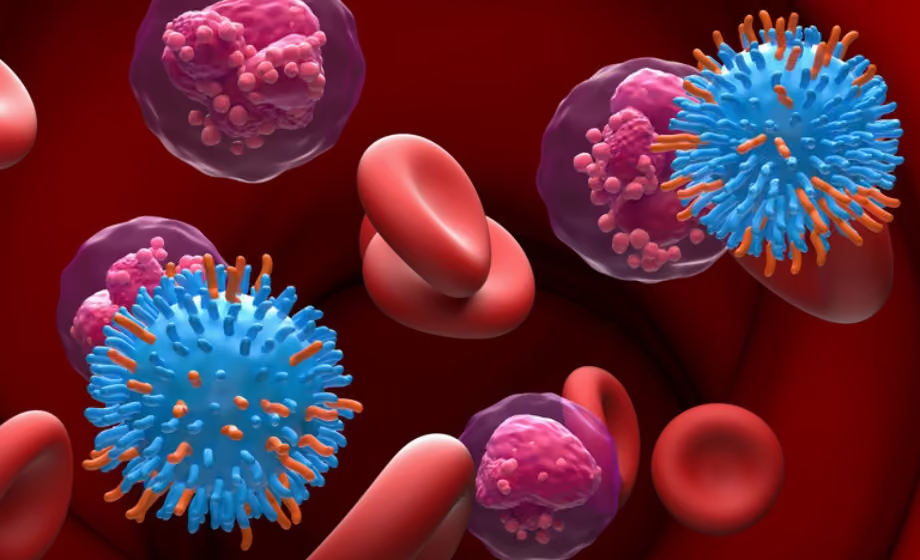
As a case study, Dr. Hultquist will share how his team used this approach to study lenacapavir, a long-acting HIV capsid inhibitor. Their work revealed a surprising role for the host factor CPSF6 in viral nuclear trafficking — helping clarify the drug's mechanism-of-action and demonstrating how primary cell editing can uncover functionally relevant insights that might be missed in cell lines.
Featuring Insights from

Judd Hultquist
PhD
Dr. Judd F. Hultquist serves as an Assistant Professor in the Division of Infectious Diseases, as the Director of the Emerging and Re-Emerging Pathogens Program, and as the Associate Director of the Center for Pathogen Genomics and Microbial Evolution in the Feinberg School of Medicine at Northwestern University. His lab studies how evolution at host-pathogen interfaces drives downstream changes in disease severity, patient outcome, and therapeutic efficacy. He has published over 100 research articles in this area spanning a diverse array of viruses, including work on SARS-CoV-2, influenza viruses, RSV, Ebola virus, and HIV.
Sponsored by
Lonza Bioscience
In Partnership with

Scientist.com
Scientist.com is the world’s largest and first platform built for the intricacies of scientific outsourcing.
We help pharmaceutical and biotechnology organizations discover, engage, manage, and scale relationships with the providers that support every stage of the pipeline—from discovery and preclinical research to clinical development, manufacturing, medical affairs, and commercialization. Through a centralized platform, organizations can access a global network of 6,000+ providers, streamline sourcing and procurement workflows, maintain compliance, manage supplier relationships, and leverage data-driven insights to make faster, more informed decisions.
Today, Scientist.com supports more than 130 life science organizations, including 24 of the world's top 30 pharmaceutical companies, helping teams reduce operational complexity, accelerate timelines, and bring innovations to patients faster. Our mission is to make it possible to cure all human disease by 2050.
















.avif)