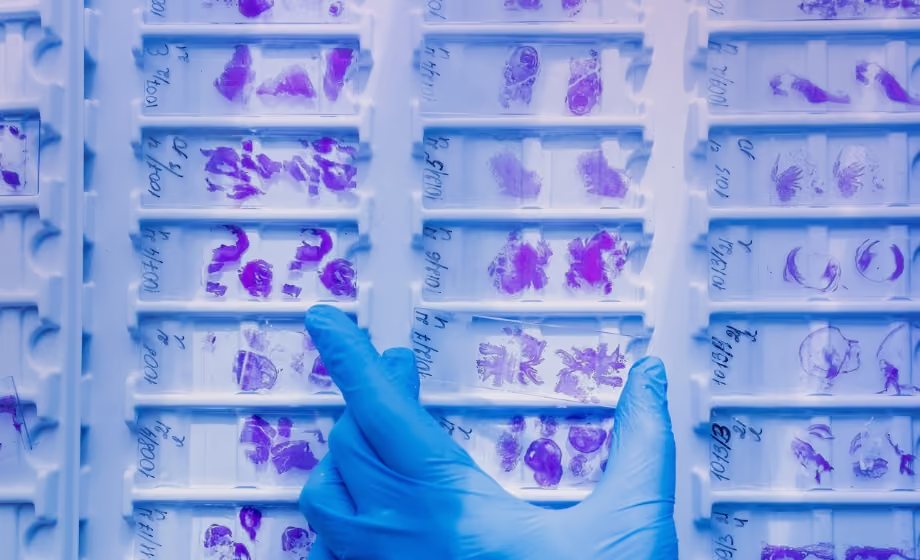
Dr. Danyi Wen describes a novel test using patient derived xenograft (PDX) samples to measure drug efficacy and identify therapeutic candidates in personalized oncology treatments.
In this webinar, Dr. Wen introduces LIDE Biotech and their range of available services which include personalized oncology. For example, LIDE utilizes next generation sequencing (NGS) or polymerase chain reaction (PCR) testing in cases where driver genes are clearly identified and functional diagnostics in instances where driver genes are unclear. In addition, they offer drug research and development services, from preclinical testing through clinical trials.
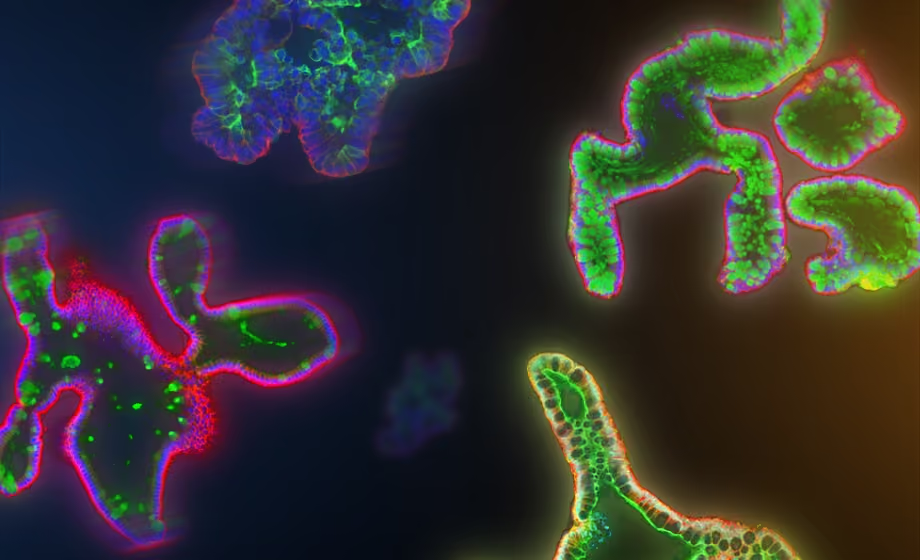
Dr. Wen first discusses functional diagnosis and its role in precision medicine. Functional diagnosis refers to in vitro and in vivo assays, such as organoid models and patient derived xenografts (PDX), with the ultimate goal of matching therapies to a particular phenotype and genotype to maximize efficacy. Organoid models may be grown from conditionally reprogrammed cells in vitro within several weeks. PDX, however, can take several months for development, since patient xenografts are transplanted in vivo into animal models. LIDE has therefore developed MiniPDX, a novel in vivo application which can provide results up to 30 times faster than conventional PDX.
". . . they can give the patient translational medicine services in about four weeks . . . in our real practice we actually, with the MiniPDX, we can shorten that to even just two weeks . . ."
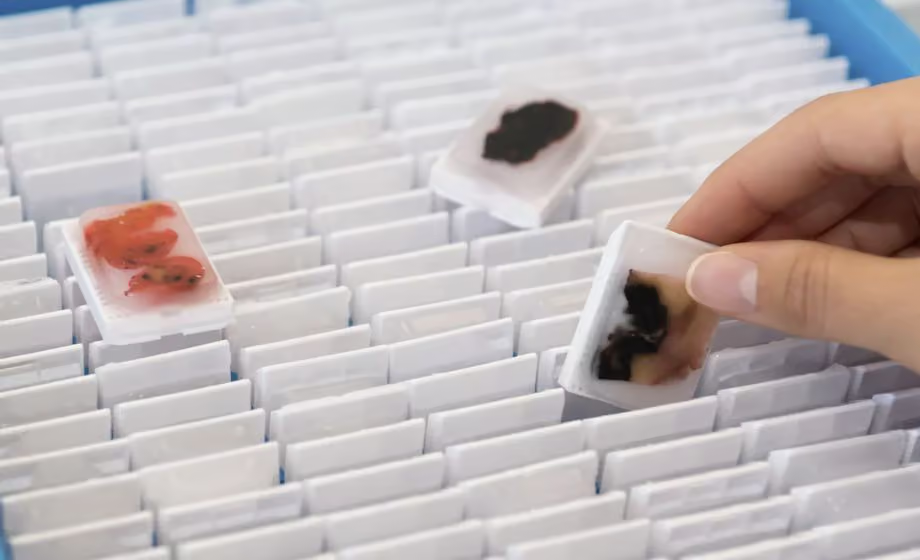
MiniPDX development involves tissue collection via surgery or biopsy, sample encapsulation, subcutaneous implantation of the capsule in mice, systemic treatment for seven days, and sample extraction for evaluation. This protocol enables identification of the most effective therapies, which are specifically tailored to the individual patient. A series of clinical studies are presented next in this webinar, demonstrating the efficacy of this approach and the high degree of correlation between the MiniPDX and traditional PDX methods.
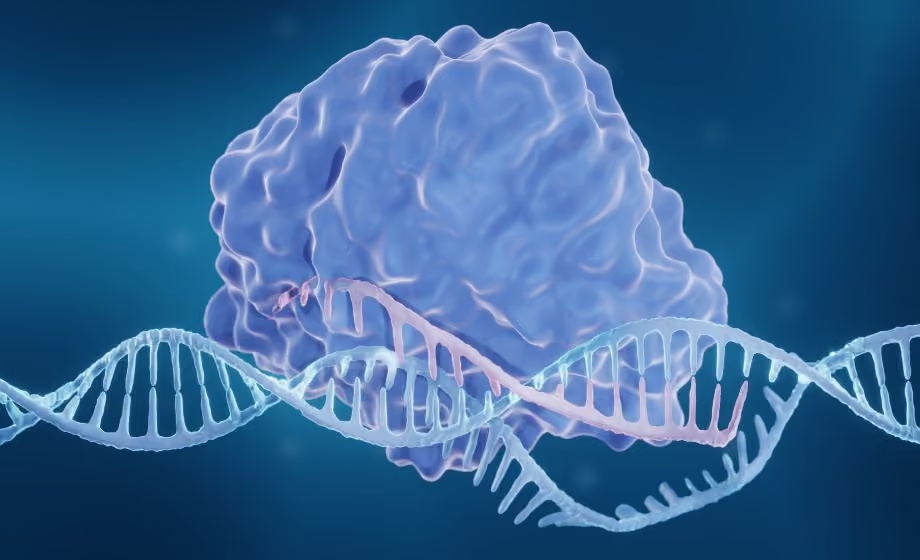
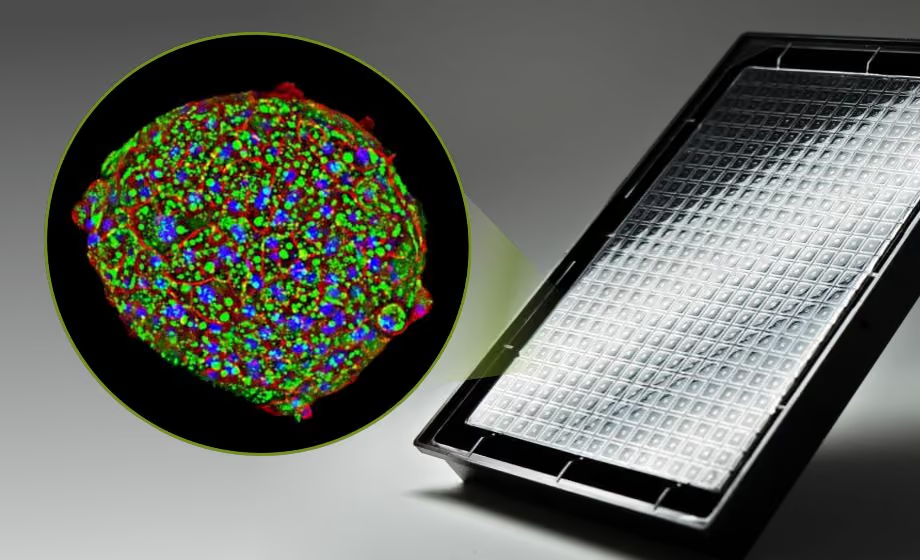
Omic analyses can be combined with MiniPDX to stratify patients based on biomarkers of interest. LIDE has developed assays known as K cell DNAseq and K cell RNAseq to obtain transcriptomic and genomic datasets using a small number of cells; validation studies revealed that these methods are as accurate as those that use much larger sample sizes. Combining genomic and transcriptomic datasets using functional genomic imaging can identify therapies that are likely to demonstrate efficacy. This data can also be combined with formalin-fixed, paraffin-embedded samples for proteomic analysis, and LIDE has developed ready-to-go panels of up to 35 biomarkers with customization options. A study employing these different methods is also presented, illustrating the application and advantages of this integrated approach.
"By this kind of approach . . . biotech companies, through those preclinical studies, they not only identify the clinical indication, they also [find] the corresponding molecular marker."
Although MiniPDX has the considerable advantage of being much faster than conventional PDX, slower approaches can still be useful for drug research and development. LIDE has developed a PDX biobank with more than 1500 models that include a range of cancer types, drug resistances, and genetic alterations.
An additional alternative to standard PDX is liquid tumor orthotopic PDX (PDOX), in which bone marrow cells are inoculated intrafemorally in mice for in vivo efficacy studies. Cell lines developed by PDOX have been used in the study of brain metastasis models. Traditional drug development approaches that begin with genetically engineered cell lines typically have success rates as low as 5%. However, this low success rate can be substantially increased by using functional diagnosis methods such as conditionally reprogrammed cells, PDX, MiniPDX, and omics.
In the final portion of the webinar, Dr. Wen describes methods used to identify novel therapeutic targets such as small interfering RNA (siRNA) libraries. Dr. Wen concludes her presentation with an example demonstrating an application of these methods involving multiple unique mutations, illustrating the potential utility of these approaches.
Webinar Highlights
- An introduction to LIDE Biotech
- The role of functional diagnosis in precision medicine
- An introduction to MiniPDX and its applications
- Combining MiniPDX with omics
- The use of functional diagnosis in drug research and development
Featuring Insights from

Danyi Wen
MBA, MSc, MD
Dr. Wen’s research foundation was 12 years at Millennium Pharmaceutical, Biogen-Idec in Boston, MA. In 2007, attracted by the innovation coming from overseas, she returned to China as VP of Biology at Shanghai ChemPartner. She founded Shanghai LIDE Biotech in 2011 to drive research and development in personalized precision medicine.
Sponsored by
Shanghai LIDE Biotech Co., Ltd. (LIDE Biotech)
In Partnership with
Scientist.com
Scientist.com is the world’s largest and first platform built for the intricacies of scientific outsourcing.
We help pharmaceutical and biotechnology organizations discover, engage, manage, and scale relationships with the providers that support every stage of the pipeline—from discovery and preclinical research to clinical development, manufacturing, medical affairs, and commercialization. Through a centralized platform, organizations can access a global network of 6,000+ providers, streamline sourcing and procurement workflows, maintain compliance, manage supplier relationships, and leverage data-driven insights to make faster, more informed decisions.
Today, Scientist.com supports more than 130 life science organizations, including 24 of the world's top 30 pharmaceutical companies, helping teams reduce operational complexity, accelerate timelines, and bring innovations to patients faster. Our mission is to make it possible to cure all human disease by 2050.










.avif)