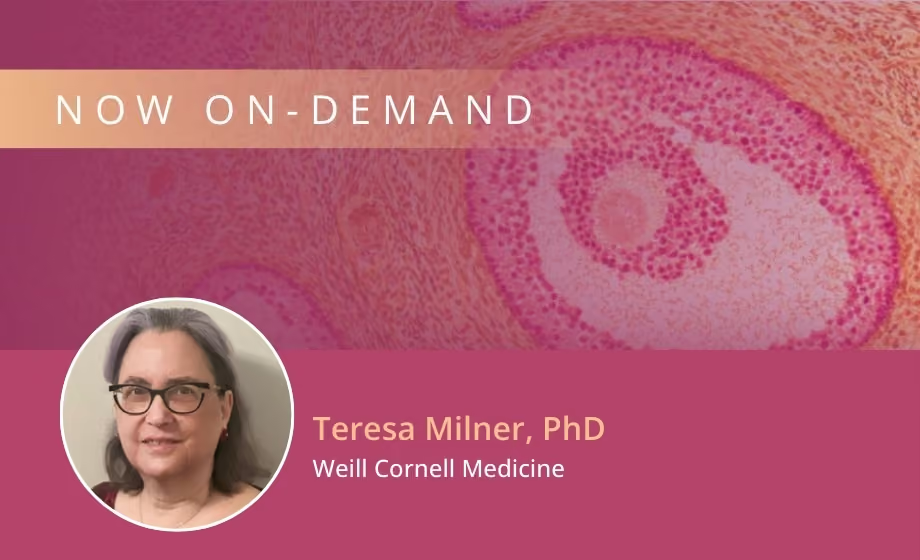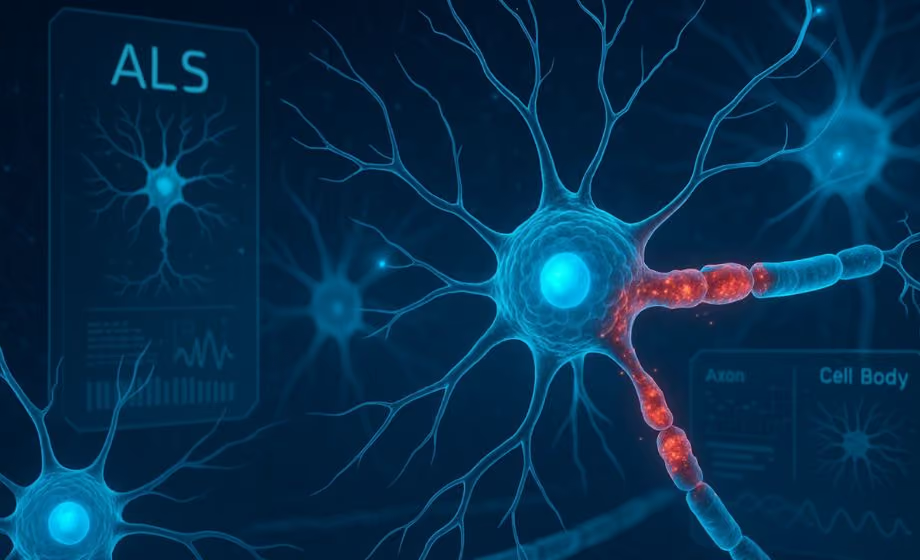
In this webinar, Vera Evanson, PhD presents how iPSC-derived ALS models reproduce hallmark disease phenotypes and their use in evaluating drug responses.
Amyotrophic Lateral Sclerosis (ALS) remains one of the most challenging neurodegenerative diseases to model and treat. Dr. Evanson will discuss how iPSC-derived ALS models reproduce TDP-43 mislocalization and how these models can be leveraged to evaluate drug responses and TDP-43 dynamics. Join to learn how Ricoh Biosciences' transcription factor-based differentiation platform enables rapid, reproducible generation of motor neurons and how these physiologically relevant models can accelerate your drug discovery, target validation, and phenotypic screening efforts in ALS research.
Featuring Insights from

Vera Evanson
PhD
Dr. Vera-Marie Evanson is an R&D Lead Scientist at Ricoh Biosciences and a lead scientist on ALS assay development, working with partners to refine our disease-modeling platform for their research needs. She specializes in assay design, high-content imaging, and image analysis, trained at Radboud University and Johns Hopkins.
Sponsored by

Ricoh Biosciences
In Partnership with
Scientist.com
Scientist.com is the world’s largest and first platform built for the intricacies of scientific outsourcing.
We help pharmaceutical and biotechnology organizations discover, engage, manage, and scale relationships with the providers that support every stage of the pipeline—from discovery and preclinical research to clinical development, manufacturing, medical affairs, and commercialization. Through a centralized platform, organizations can access a global network of 6,000+ providers, streamline sourcing and procurement workflows, maintain compliance, manage supplier relationships, and leverage data-driven insights to make faster, more informed decisions.
Today, Scientist.com supports more than 130 life science organizations, including 24 of the world's top 30 pharmaceutical companies, helping teams reduce operational complexity, accelerate timelines, and bring innovations to patients faster. Our mission is to make it possible to cure all human disease by 2050.









.avif)