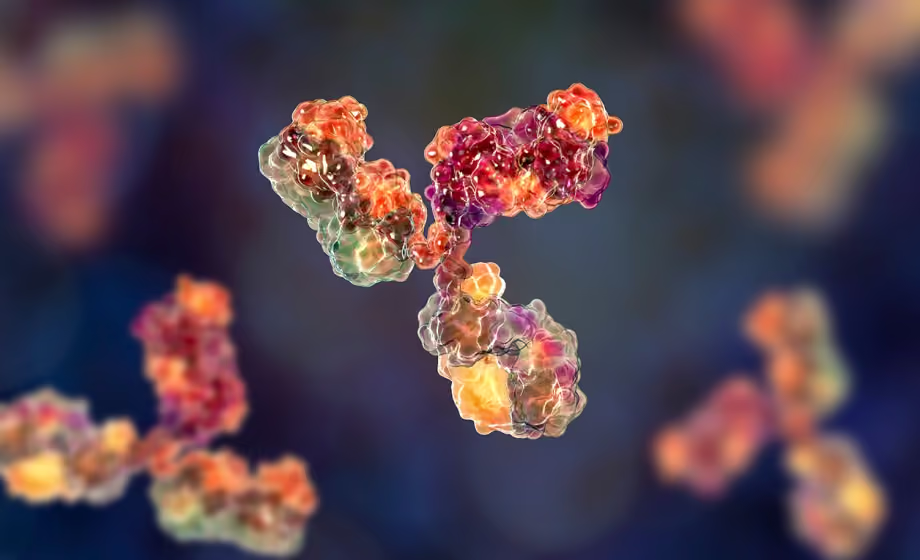
Dr. Luke Holloway reviews light scattering-based methods for protein characterization and explains their utility, when combined with partially denaturing buffers, in understanding aggregation propensity of monoclonal antibodies.
Determining the developability of candidate molecules and optimizing formulations require rapid assessment of biophysical characteristics using accelerated stressors to represent normal storage conditions. Thermal stress, assuming the Arrhenius relationship between temperature and degradation rate (which has been successfully used for small molecule development), is the most common approach. Unfortunately, this relationship is not straightforward for biological molecules, so alternative approaches, such as using denaturants to accelerate non-native interactions, could prove beneficial.
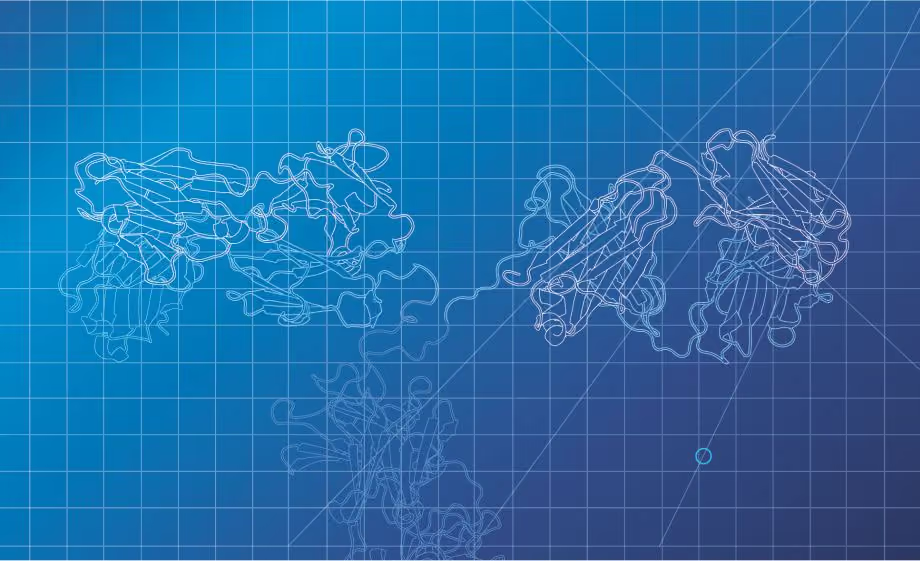
Static and dynamic light scattering are invaluable tools for quantifying protein-protein interactions and aggregation phenomena. This webinar reviews light scattering-based methods for protein characterization and explains their utility, when combined with partially denaturing buffers, in understanding aggregation propensity of monoclonal antibodies (mAbs).
Who Should Attend?
- Researchers in the field of biopharmaceutical liquid formulation development
- Scientists involved in discovery, optimization and analytical characterization of novel biotherapeutics
- Managers in biopharmaceutical R&D labs seeking automated means and shortened timelines for identifying developable candidates and stable formulations
Featuring Insights from
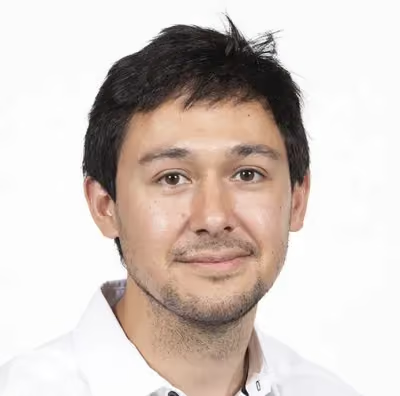
Luke Holloway
PhD
Luke studied Biomedical Science for his undergraduate degree at the University of West of England (2007) before going on to work in the testing laboratories at the NHS Blood and Transplant. He then went on to work for the pharmaceutical company Vectura for over 5 years before embarking on a PhD under the supervision of Dr. Robin Curtis at the University of Manchester. Here he studied the effects of denaturants on aggregation propensity of biopharmaceuticals and forms the basis of this talk. Luke now works for Wyatt Technology in the UK as a Field Application Scientist and has done so for the last 3 years.
Sponsored by














.avif)