In this blog, we explore the shortcomings of standard health economics and outcomes research (HEOR) models, and how distributional cost-effectiveness analysis (DCEA), social risk factor adjustments, and similar equity-focused methodologies have the potential to reshape the landscape of health economics and policy in the future.
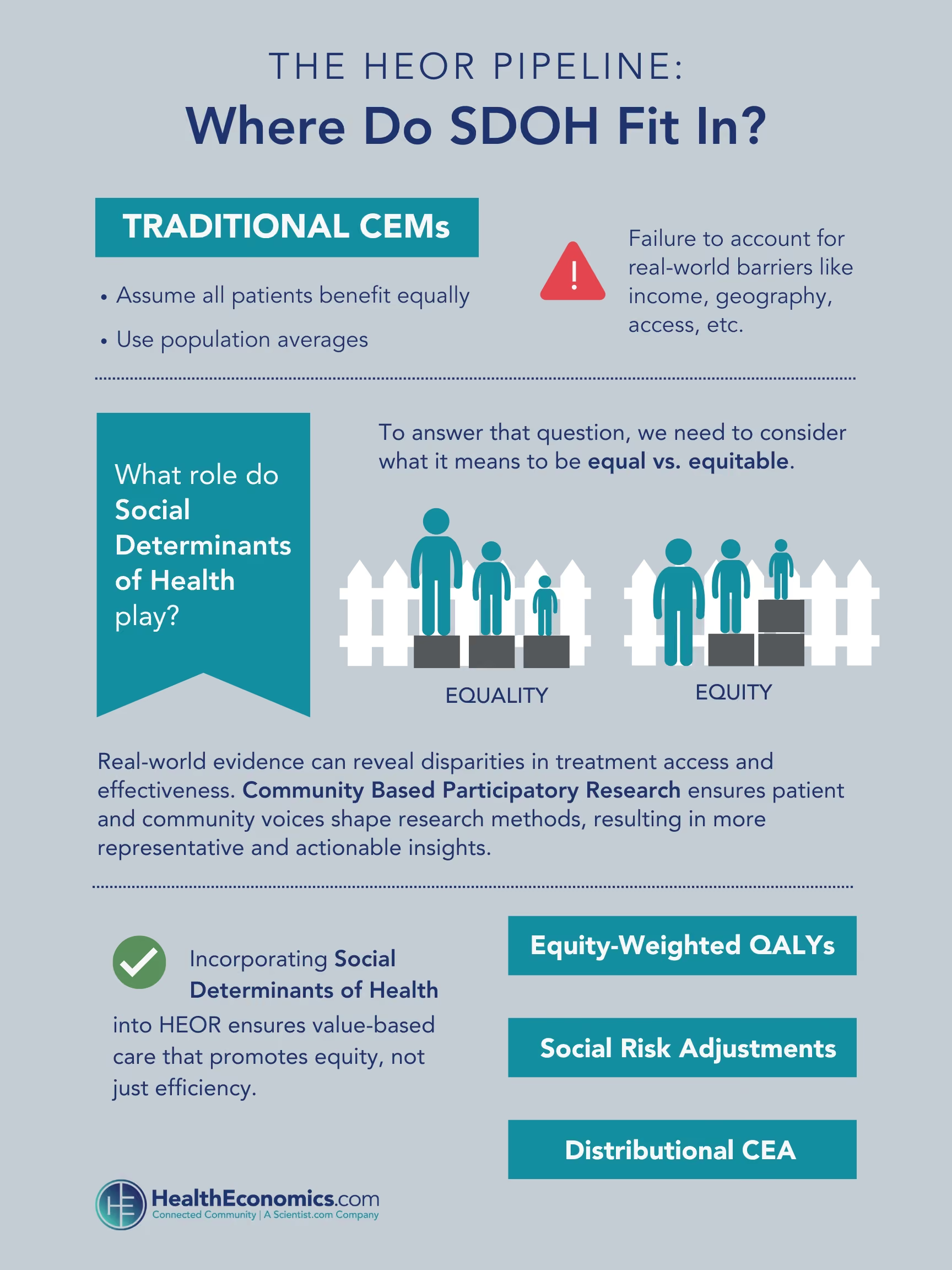
The foundation of healthcare decision-making to guide pricing and policy has traditionally relied on health economic models, particularly in assessing the cost effectiveness and value of proposed interventions. Unfortunately, these frameworks largely rely on population averages and assumptions that health benefits and cost-effectiveness are equally distributed across all patients. What this approach cannot consider is the fundamental reality that social determinants of health (SDOH) create large gaps in healthcare access, outcomes, and treatment adherence—bringing to bear the longstanding conversation of health equality versus health equity Cost-effectiveness analyses (CEAs). In fact, CEAs, the most common form of health economic evaluation, rarely account for disparities as they often rely on aggregate population data. Moreover, using such data sets to inform policy and health initiatives can mask the true extent of inequality within a community or region, as disparities are obscured by the aggregated data.
When looking at socioeconomic status, geography, race, education, and healthcare access—the critical data points for overall health—it becomes clear that health outcomes are not uniform across populations. Despite this realization within policy and research groups, adoption of new strategies in addition to overall progress has been slow, and those working in HEOR continue to rely on models that often assume a one-size-fits-all approach when assessing the value and prioritization of interventions and treatments. This presents a number of challenges, such as overlooking social risk factors in cost-effectiveness models (CEMs) or misjudging patient access and the benefits of treatment.
When social determinants of health are not weighed in appropriately, the data becomes skewed and may fail to reflect the true impact on different populations. To ensure that health economic evaluations promote equity, not just efficiency, incorporating a more nuanced approach must be a priority for the future of HEOR.
That said, all is not lost; an evolution of HEOR is coming. Here are some emerging frameworks that show promise in addressing the limitations expressed above in traditional CEA and CEM methodology:
1. Distributional Cost-Effectiveness Analysis
An extension of traditional CEA, distributional cost-effectiveness analysis takes into consideration health benefits and how they are distributed through socioeconomic groups. Rather than maximizing health gains, the approach prioritizes interventions that reduce health disparities by assessing whether or not a particular treatment would disproportionately benefit underserved populations. DCEA means stakeholders could adjust pricing and reimbursement strategies.
2. Social Risk Factor Adjustments in Reimbursement Models
Models that adjust payments on the basis of social risk factors have been introduced by The Centers for Medicare & Medicaid Services (CMS). This ensures that providers who treat marginalized communities do not face repercussions for lower health outcomes. This shift acknowledges the growing recognition of the impact of SDOH in health outcomes and is critical to create reimbursement programs that are based on risk factors and ensuring an equitable, value-based payment model.
3. Equity-Weighted QALYs
Situations present where two patient groups benefit equally from a treatment, but if one faces barriers to access due to their socioeconomic status, equity-weighted QALYs can redistribute the value of health gains to accommodate. Additional years of healthy life for patient groups in lower-income or marginalized communities may hold greater significance in the face of higher disease burdens.
4. Community-Based Participatory Research Methods
In a talk given at MAPS 2025 in New Orleans, a panel of industry experts discussed the evolving role of patients and community in medical affairs and overall decision making. This concept of Community-Based Participatory Research (CBPR) does just that. CBPR actively includes community members, particularly in under-represented populations, in the design, implementation, and analysis of studies. The community is treated more like a stakeholder and partner, rather than a subject. Placing greater emphasis on the importance of local understanding and considering community input at each stage of research ensures that the eventual outcomes and interventions are in fact meeting the specific needs of the community members. If the ultimate goal is to generate outcomes that are grounded in real-world context, or that consider cultural beliefs, sustainability, and population adherence, models that offer a platform for the marginalized communities to share their voice, like CBPR could be the answer. There is also something to be said for the ability of these types of models to build and strengthen trust between researchers and communities.
As the HEOR landscape evolves, the question becomes not if we should be looking to alternative models, but how quickly can we implement models that reflect the wide range of patient populations. It is critical that HEOR models move from equality to equity. Continuing to rely on unadjusted averages will perpetuate the inequities we currently see, when the goal should be to mitigate them. Stakeholders that advocate for this shift towards equity-focused methodologies reflect a group that can create impactful waves in the healthcare system. Recognizing the real world impact of SDOH marks a leap forward in establishing a system that prioritizes equity to ensure that value assessments genuinely serve ALL patients, and is no longer based solely on efficiency.

Take the Next Step
Explore Suppliers
Browse trusted partners with relevant expertise
Review Capabilities
Compare services, experience, and past work
Start Your Project
Connect and begin collaborating
.png)

.jpg)






.png)
.avif)





.avif)