AAV gene therapies are reaching the clinic faster than ever, but the DNA starting material that feeds every AAV production run hasn't kept up. Plasmid DNA produced by bacterial fermentation typically takes 3-5 months for GMP-grade material, and that timeline often sits on the critical path of programs. Synthetic, enzymatically produced DNA changes that equation.
The DNA Bottleneck in AAV Production
AAV production uses a three-plasmid transient-transfection system: Rep/Cap and helper plasmids (standard, shelf-stable, reused across programs) plus the ITR-flanked transfer vector encoding the gene of interest (GOI). The GOI plasmid is the per-program component: cloned, fermented in E. coli, purified, and released to GMP standards for every new sequence.
That process takes 3-5 months for clinic-ready material, and it gates everything downstream. Process development cannot fully scale until release-ready DNA is in hand. Manufacturing slots wait. Every design iteration restarts the clock.
Synthetic DNA, Made Differently
Artis BioSolutions produces optimized synthetic DNA (oDNA) through a cell-free enzymatic process. The output is pure, linear, double-stranded DNA encoding only the GOI — no bacterial backbone, no antibiotic-resistance markers, no endotoxin, no fermentation step anywhere in the workflow.
Two practical consequences follow. First, delivery compresses from 3-5 months to 4 weeks or less for both RUO and GMP-grade material. Second, the quality profile improves as cell-free production eliminates host-cell contaminants, simplifies downstream analytical burden, and removes antibiotic-resistance markers that complicate regulatory dossiers.
What DNA in Under 4 Weeks Means for Your Program
Compressing the DNA timeline doesn't just save weeks on one step — it changes how the whole program runs. With oDNA, AAV process development can progress in parallel with GMP synthesis from day one. With plasmid DNA, the manufacturing schedule waits for fermentation to finish before scale-up begins.
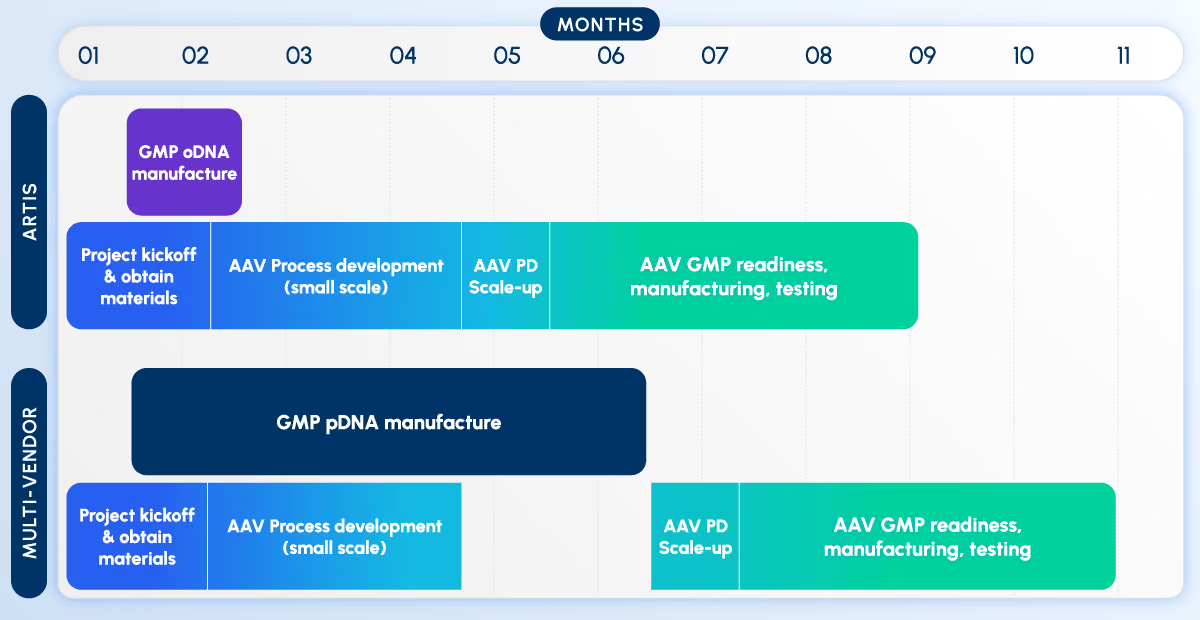
The result is a program that reaches GMP readiness ~2 months earlier, without changing the manufacturing process itself. The savings come from removing the serial dependency between starting-material production and process development.
Higher AAV Yield, Quality Maintained
Compressed timelines mean nothing if the resulting vector underperforms. In a head-to-head comparison of AAV8 production using identical packaging and helper inputs, the only variable changed was the GOI source: conventional plasmid versus oDNA.
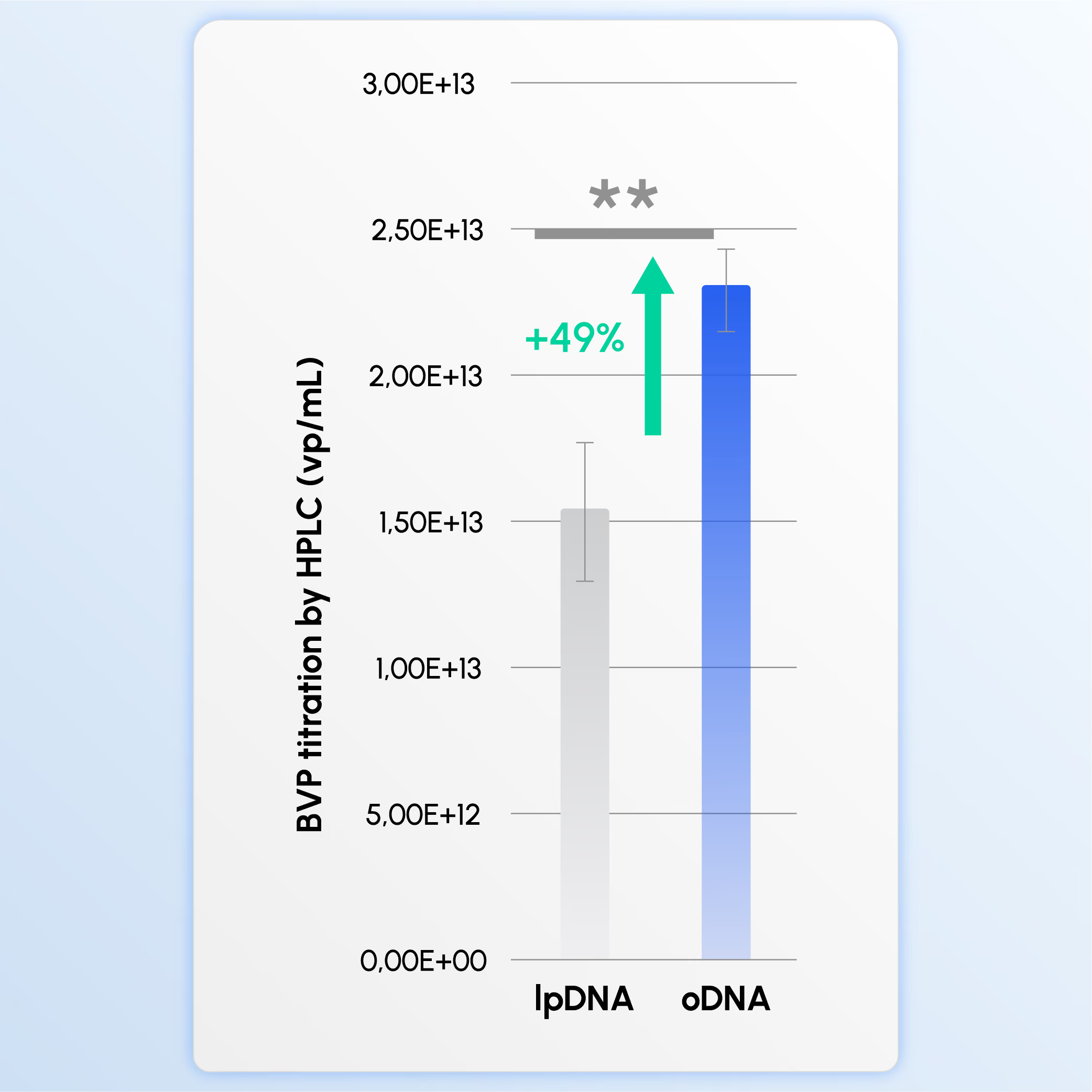
The oDNA condition delivered an almost 50% higher viral genome titer than the matched plasmid control. Across the same comparison, the full-to-empty (F/E) capsid ratio was maintained, meaning the yield increase did not come at the cost of packaging quality. The lift is in productive, packaged vector.
The proposed mechanism: proprietary adapters flanking the GOI + ITR that are optimized specifically for AAV manufacturing process, plus an overall cleaner DNA input, translate into a more productive producer-cell population with less metabolic burden, less innate-immune activation, more capacity directed to vector assembly.
One Partner from GOI to GMP Vector
ArtisBioSolutions doesn't just supply oDNA. Through Landmark Bio, the same organization manufactures the AAV vector (at 50L–200L scale), with integrated upstream and downstream operations and a shared analytical and quality system. That removes the supplier-to-CDMO handoff that traditionally introduces delays and accountability gaps, enabling:
- GOI synthesis and the manufacturing schedule planned together from day one
- A single quality system spanning both DNA release and vector campaign
- Construct iteration loops that close in weeks, not quarters
- Fewer handoffs, fewer points where timelines slip
Synthetic DNA as a starting material for AAV is no longer hypothetical — enzymatically produced DNA has already moved into the clinic as a starting material in active AAV gene therapy trials. What's changing now is the speed, scale, and integration with downstream vector manufacturing.
Get Started
Whether you need synthetic DNA starting material, AAV manufacturing, or an integrated path from GOI to clinical-grade vector, Artis BioSolutions is ready to support your program.
Explore our capabilities and start a project on Scientist.com:

Take the Next Step
Explore Suppliers
Browse trusted partners with relevant expertise
Review Capabilities
Compare services, experience, and past work
Start Your Project
Connect and begin collaborating
Sponsor


.png)

.jpg)

.png)
.avif)


.avif)