.avif)
Outsourced research and contract research organization (CRO) studies are essential in modern therapeutic development. They allow teams to scale faster, access specialized expertise, and accelerate timelines. At the same time, it introduces additional complexity.
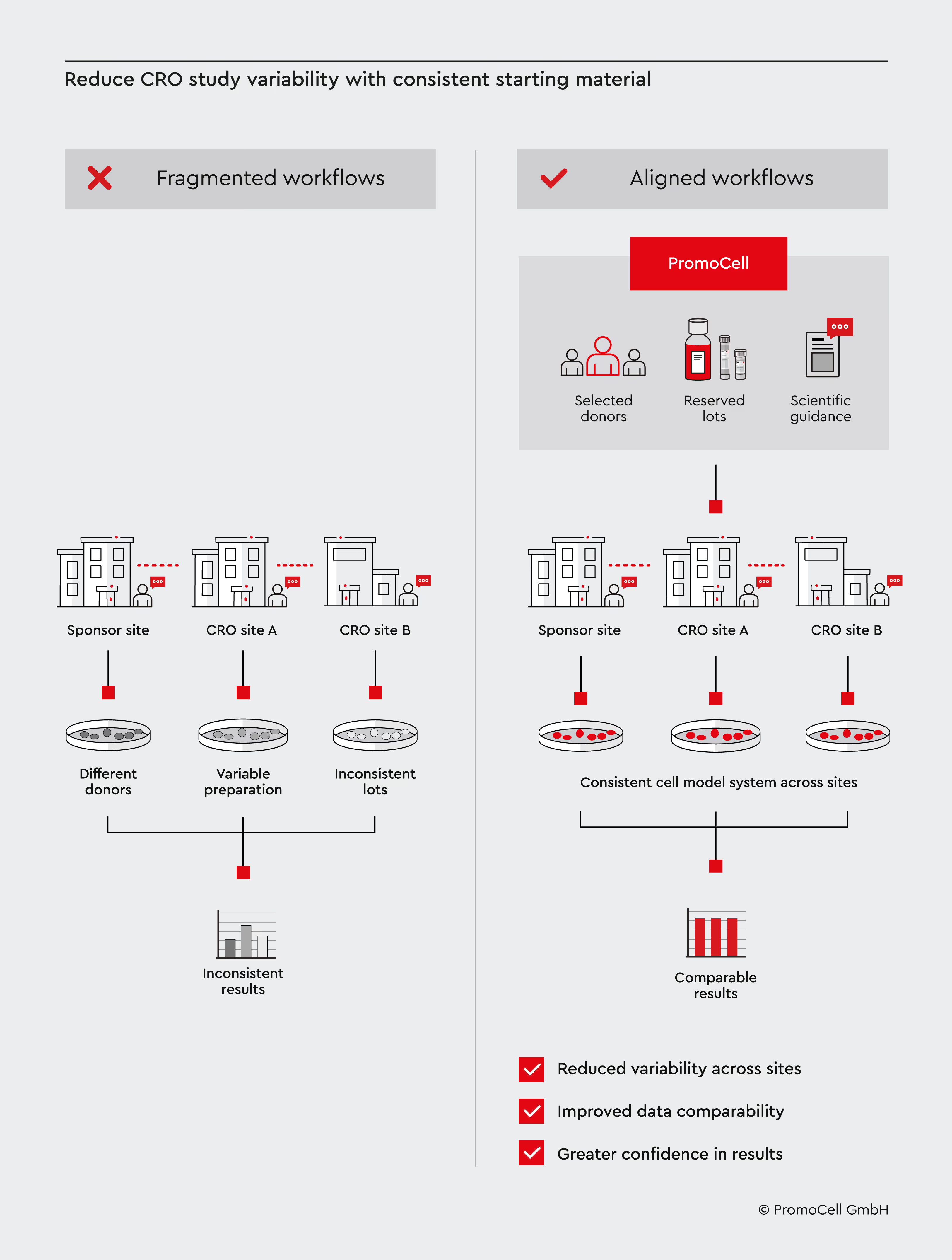
When studies span across multiple sites, maintaining consistency becomes more challenging. Experimental design, handling procedures, culture conditions, and data interpretation can vary between sponsor teams and CRO partners.
One critical factor, however, is often underestimated: the biological starting material.
Cell model selection in CRO studies is not just a technical detail. It is a key decision that influences reproducibility, data comparability, and the translational relevance of outsourced research. Standardized cell models, defined donor material, and reliable supply can help reduce biological variability from the start.
What are the hidden risks in CRO workflows?
In outsourced research, control over experimental conditions is inherently reduced. Even with well-defined protocols, variability can arise between sponsor sites, internal laboratories, and CRO partners.
Common sources of variability in CRO studies include:
- Differences in cell sourcing and donor characteristics
- Inconsistent preparation steps across sites
- Limited availability of the same material throughout a study
- Variation in culture conditions, media, or handling procedures
- Divergent interpretation of assay setup or troubleshooting steps
These factors can introduce variability that is difficult to predict but may significantly affect study outcomes. Even well-designed studies can lead to inconsistent or less comparable results if the biological model is not standardized from the start.
Why does cell model selection matter in CRO studies?
In CRO studies, cell model selection affects more than assay relevance. It shapes how easily a study can be transferred, repeated, and compared across internal and external sites.
When different donors, lots, or preparation workflows are used, sponsor and CRO teams may need to re-optimize assay conditions, repeat qualification steps, or troubleshoot unexpected differences between datasets. Variability can therefore enter the workflow before experiments even begin.
Defining the cell model early helps teams align assay setup, material planning, and study execution across internal and external sites. This creates a more consistent foundation for comparing results across repeated runs, locations, and project phases.
The right model helps CRO and sponsor teams:
- Start from a defined and well-characterized biological system
- Reduce variability between internal and external study sites
- Compare datasets more reliably across repeated assay runs
- Avoid delays caused by material changes or inconsistent preparation steps
- Select donor characteristics that are relevant to the study question
By defining the cell model early, research teams can better align biological material, experimental design, and CRO execution from the start.
Which cell models are relevant for outsourced CRO studies?
Selecting appropriate cell systems helps address key challenges in outsourced research. Cardiac cell models, assay-ready macrophages, and HLA-typed primary cells are particularly relevant for CRO workflows because they support defined assay setup, reduced variability, and improved translational relevance.
Cardiac cells for predictive safety assessment
In CRO workflows, cardiovascular toxicity remains a major reason for late-stage drug failure. Reliable in vitro cardiac assays are essential to identify potential risks early in development.
Primary human cardiac cells provide a more physiologically relevant system compared to non-human or immortalized models.They support applications such as:
- Cardiotoxicity screening
- Functional assays, such as contractility studies
- Disease modeling
For CRO studies, defined cardiac cell models for cardiotoxicity testing help sponsor and CRO teams work from a more consistent, assay-relevant starting point. This supports more comparable functional assay results across sites and can improve early decision-making during safety assessment.
By aligning the cardiac cell model early, teams can reduce variability across experiments and lower the risk of late-stage issues caused by inconsistent or poorly transferable assay systems.
Assay-ready macrophages for standardized immune assays
Macrophages play a central role in inflammation and immune response studies. However, generating macrophages from precursor cells introduces variability and requires time, expertise, and controlled differentiation conditions.
Assay-ready macrophages address these challenges by providing a standardized starting point for immune assays. In the context of cryopreserved, pre-differentiated macrophages, cells can be thawed and plated directly into assays, helping reduce the need for site-specific differentiation workflows.
This supports:
- Standardized immune assay setup
- Reduced preparation time before experiments begin
- Lower variability from separate differentiation workflows
- More consistent results across repeated experiments or multiple sites
For outsourced workflows, this allows CRO studies to begin with comparable starting material across sites. By reducing differences in differentiation timing, handling, and protocol execution, assay-ready macrophages can help sponsor and CRO teams maintain closer alignment during immune assay studies.

HLA-typed cells for translational immunology studies
In immunology, immuno-oncology research, autoimmune therapy development, and personalized medicine, understanding how therapeutic cells interact with human immune targets is critical. Before moving into in vivo studies, researchers need in vitro systems that can help identify potentially harmful off-target activity and support more informed study design.
HLA-typed primary cells provide defined door characteristics and a known genetic background. This enables more controlled and interpretable evaluation of immune interactions.
HLA-typed cells support:
- In vitro off-target activity and toxicity testing
- Immuno-oncology and autoimmune therapy studies
- Patient- or donor-relevant study design
- Better interpretation of immune responses
- More informed selection of material for translational research
In CRO settings, access to HLA-defined material helps sponsor and CRO teams design studies around relevant immune backgrounds from the start. This is particularly important when immune response, donor background, off-target toxicity, or patient stratification plays a central role in the study design.
Enabling consistent workflows across CRO and sponsor sites
Successful outsourcing requires more than selecting the right CRO. It depends on having a reliable partner who supports outsourced study standardization, cell supply consistency, and coordinated workflows across all study participants.
PromoCell supports CRO-based studies by enabling access to standardized primary human cell models and helping ensure continuity across sites and study phases.
Key capabilities for supporting standardized CRO studies include:
- Availability of consistent cell lots throughout the entire study duration
- Reservation of donor material to support continuity across experiments
- Direct shipment of cells to both sponsor and CRO sites
- Scientific support for study setup, troubleshooting, and optimization
- Coordinated supply planning for internal teams and CRO partners
By aligning biological materials, logistics, and scientific support, we help reduce variability and support a consistent biological foundation across stakeholders.
For CRO collaboration, this is especially valuable when studies involve multiple locations, repeated assay runs, long project timelines, or parallel internal and external work streams.
How to select the right cell models in CRO studies
When planning outsourced research, asking the right questions early can help prevent downstream issues:
- Is the same donor material available for the full duration of the study?
- Can identical cell lots be used across multiple sites?
- Does the model require extensive preparation, or is it assay-ready?
- Are donor characteristics, such as HLA type or health status, important for the study?
- Is supply reliable and scalable as the project progresses?
- Can material be shipped directly to sponsor and CRO sites?
- Is scientific support available if challenges arise?
Addressing these points early helps outsourced research start with a consistent and well-defined biological foundation. This can reduce delays, limit avoidable variability, and improve overall study quality.
Standardized cell models help reduce risk in outsourced research
Outsourcing accelerates research but also increases the need for consistency and standardization. While selecting the right CRO is important, the choice of biological model is equally critical.
Using well-characterized, standardized cell systems helps reduce variability in CRO studies, improve reproducibility, and support more reliable data generation. Primary human cells, assay-ready systems, and HLA-typed models can all play a role in strengthening outsourced research workflows.
By considering cell model selection early, research teams can better align biological material, study design, and execution from the start.
Explore primary human cells, assay-ready systems, and HLA-typed models for CRO studies:
Learn how PromoCell supports aligned cell models, donor material, supply planning, and scientific support across outsourced research sites:

Take the Next Step
Explore Suppliers
Browse trusted partners with relevant expertise
Review Capabilities
Compare services, experience, and past work
Start Your Project
Connect and begin collaborating
Sponsor


.png)

.jpg)





.png)
.avif)