Liquid biopsy has transformed disease research by enabling access to circulating biomarkers through minimally invasive sampling. Multiple molecular layers - including cell-free DNA (cfDNA), epigenetic features such as histone modifications on circulating nucleosomes, and cell-free RNA (cfRNA) - provide complementary insights into disease biology. While cfDNA and epigenetic profiling reveal genomic and regulatory alterations, cfRNA captures active gene expression, offering a dynamic view of biological processes in real time. In plasma, cfRNA includes both coding and non-coding RNA species, providing a rich and multidimensional source of information for biomarker discovery.
Because cfRNA reflects active transcriptional programs and dynamic cellular states, profiling diverse RNA biotypes can further enhance biological resolution and improve the identification of robust biomarkers.
Realizing the full potential of cfRNA in liquid biopsy applications requires workflows that capture this complexity with high sensitivity and reproducibility. To address this need, the D-Plex cell-free RNA-seq technology was developed to enable comprehensive and robust profiling of plasma cfRNA from limited input material.
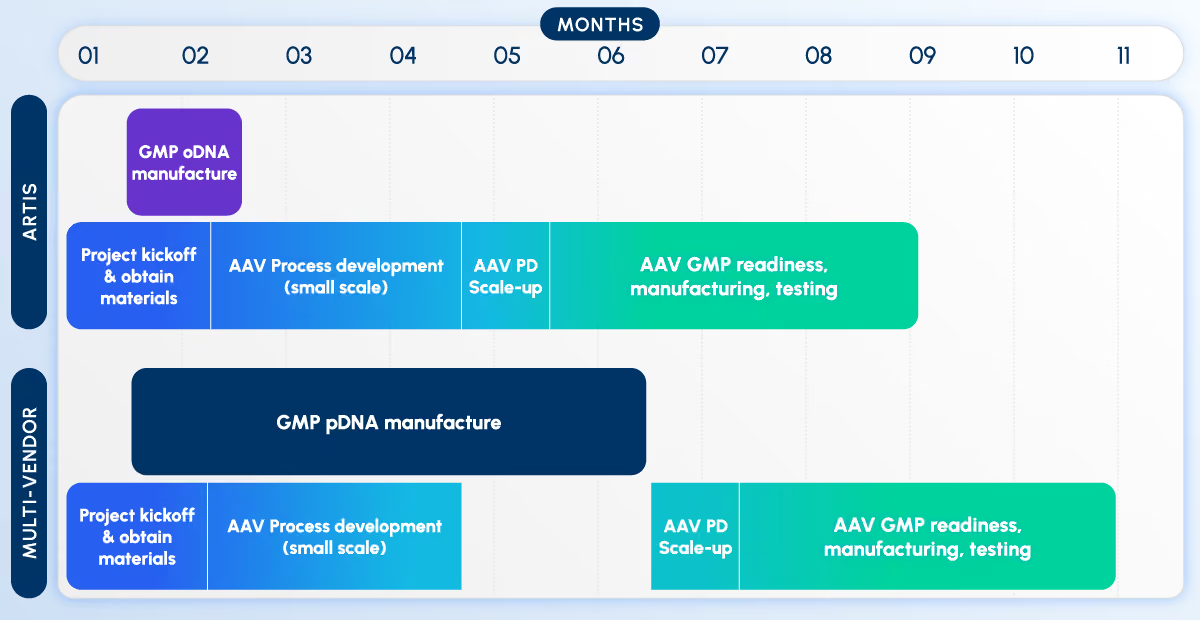
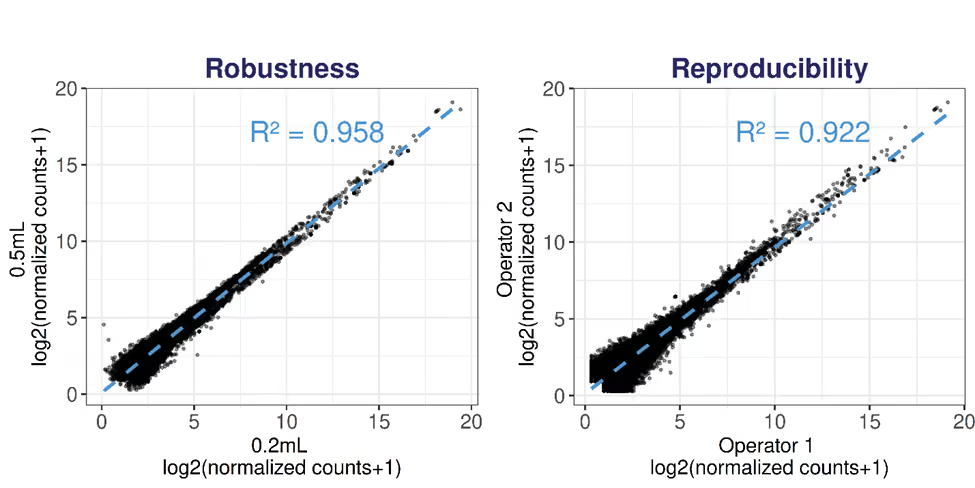
The analytical performance of the D-Plex technology was evaluated using pooled plasma samples across multiple input volumes and operators. The workflow demonstrated strong reproducibility and robust performance, even at low input volumes (Figure 1), which is an essential requirement for liquid biopsy applications where sample material is often limited.
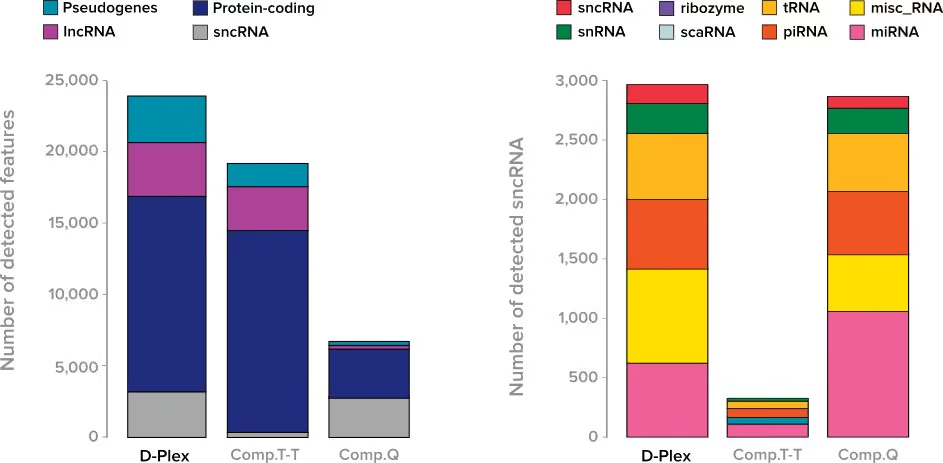
In addition to its robustness, the D-Plex cell-free RNA-seq technology consistently captured a broad spectrum of RNA biotypes, detecting a higher number of features and greater diversity than alternative workflows (Figure 2). This expanded coverage highlights the advantage of comprehensive profiling when analyzing complex plasma samples.
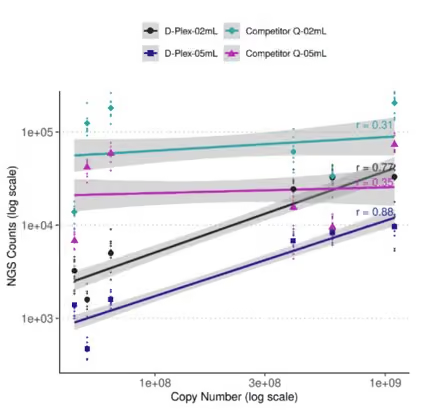
Although not specifically designed as a miRNA-focused approach, the D-Plex technology demonstrated strong quantitative performance for miRNA, showing higher concordance with expected input levels and outperforming a miRNA-specific competitor technology (Figure 3). This indicates that broad transcriptome profiling can be achieved without compromising miRNA detection, workflows that many studies have traditionally relied on.
To further explore the biological relevance of comprehensive cfRNA profiling, the D-Plex technology was applied in a breast cancer case-control setting. The analysis revealed that broader multi-biotypes cfRNA-based signatures can distinguish cancer from healthy samples with higher performance than miRNA-driven models.
Comprehensive plasma cfRNA profiling, therefore, represents a powerful and complementary approach for biomarker discovery. By combining broad transcriptome coverage, strong reproducibility, and robust performance at low input volumes, the D-Plex cell-free RNA-seq technology enables researchers to extract meaningful biological insights from limited plasma samples enhancing patient discrimination. Together with cfDNA and circulating nucleosomes approaches, cfRNA profiling expands the scope of liquid biopsy, opening new opportunities for more informative and actionable molecular diagnostics.
To learn more and receive the full case study, please follow this link.

Take the Next Step
Explore Suppliers
Browse trusted partners with relevant expertise
Review Capabilities
Compare services, experience, and past work
Start Your Project
Connect and begin collaborating
Sponsor

.jpg)





.png)
.avif)





.avif)