The Cancer-Immunity Cycle: Research Solutions for Preclinical Immuno-Oncology Blog post by Nina Culum, MSc Cancer immunotherapy has undoubtedly expanded the cancer treatment landscape, improved patient outlook, and is now a pillar of cancer care [1]. Such progress can in part be attributed to the recognition of the importance of the cancer-immunity cycle as a whole [2]. Factors in the tumor microenvironment (TME) can modulate activated antitumor immune responses, emphasizing that the cancer immune response actually comprises a series of distinct and regulated steps that are optimally addressed as a group [3]. By considering the cancer-immunity cycle as a whole, more effective and novel immunotherapeutic targets and mechanisms can be identified. But first, what exactly is the cancer-immunity cycle? https://youtu.be/s0THxEeshHc
Overview of Crown Bioscience's immuno-oncology research approaches and assays.
The cancer-immunity cycle: a brief overview
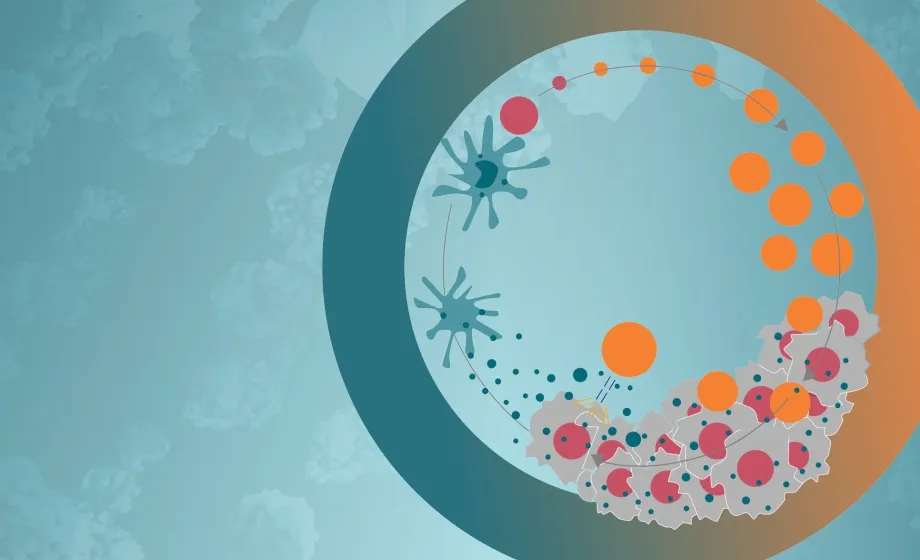
Described in detail by Chen et al., the cancer-immunity cycle refers to a sequence of events that must be initiated and propagated for the anticancer immune response to result in cancer cell death (Figure 1) [3]. Briefly, neoantigens are released and captured by dendritic cells, which must be accompanied by signals that specify immunity for an anticancer T cell response. Dendritic cells then present captured antigens to T cells, leading to priming and activation against cancer-specific antigens; this step determines the nature of the immune response, with the balance of T effector and regulatory cells being critical to the final outcome. Lastly, activated effector T cells traffic to and infiltrate the tumor bed, recognize and bind to cancer cells, and kill their target cancer cell; this releases more tumor-associated antigens, thus beginning the cycle anew. https://insidescientific.com/wp-content/uploads/2022/10/Cancer-Immunity-Cycle-graphic.jpg
Figure 1: Illustration of the cancer-immunity cycle, adapted from ref. 3.
In cancer patients, tumor antigens may go undetected, dendritic and T cells may not treat antigens as foreign, T cells may be inhibited from tumor infiltration, and factors in the TME may suppress effector cells that are produced [3]. For cancer immunotherapy treatments to be effective, they must retain activity despite negative feedback mechanisms, which therefore requires consideration of the cancer-immunity cycle as a whole. A number of innovative and efficient techniques are now available to researchers for preclinically screening new treatment approaches, with the choice of appropriate model depending on the purpose of the study. For this blog, well be highlighting some in vitro and in vivo models that facilitate cancer immunotherapy research, including organoids, xenografts, and genetically engineered mouse models (GEMMs). [fusion_builder_column type="1_1" layout="1_1" align_self="auto" content_layout="column" align_content="flex-start" valign_content="flex-start" content_wrap="wrap" spacing="" center_content="no" column_tag="div" link="" target="_self" link_description="" min_height="" hide_on_mobile="small-visibility,medium-visibility,large-visibility" sticky_display="normal,sticky" class="" id="" background_image_id="" type_medium="" type_small="" order_medium="0" order_small="0" spacing_left_medium="" spacing_right_medium="" spacing_left_small="" spacing_right_small="" spacing_left="" spacing_right="" margin_top_medium="" margin_bottom_medium="" margin_top_small="" margin_bottom_small="" margin_top="20px" margin_bottom="" padding_top_medium="" padding_right_medium="" padding_bottom_medium="" padding_left_medium="" padding_top_small="" padding_right_small="" padding_bottom_small="" padding_left_small="" padding_top="30px" padding_right="30px" padding_bottom="20px" padding_left="30px" hover_type="none" border_sizes_top="" border_sizes_right="" border_sizes_bottom="" border_sizes_left="" border_color="" hue="" saturation="" lightness="" alpha="" border_style="solid" border_radius_top_left="" border_radius_top_right="" border_radius_bottom_right="" border_radius_bottom_left="" box_shadow="no" box_shadow_vertical="" box

Take the Next Step
Explore Suppliers
Browse trusted partners with relevant expertise
Review Capabilities
Compare services, experience, and past work
Start Your Project
Connect and begin collaborating
Sponsor

.png)

.jpg)





.png)
.avif)



.avif)