
Infrastructure rarely draws attention when it works well. Yet in drug discovery, time is often lost not within a single experiment, but between disciplines: while compounds move from design to synthesis, samples are prepared, assays are scheduled and data is assembled for the next project decision.
That changes how scientific infrastructure should be judged. The meaningful measure is not the number of instruments or sites in a network; it is whether people, processes and technologies work together to shorten the design-make-test-analyze (DMTA) cycle, improve confidence in the data and preserve continuity as a program advances.
For Jubilant Biosys, the recent investments at Greater Noida are best understood in this wider context. They are not the beginning of integration, but the next extension of an operating model built through years of integrated program delivery in Bengaluru and broadened through biologics discovery capabilities in France.
Integration built through program delivery
Integrated drug discovery is not simply a collection of services under one company name. It depends on scientists working toward common program objectives, sharing data at the right cadence and making decisions across disciplines rather than through a sequence of disconnected handoffs.
Jubilant Biosys' Bengaluru site has been a pioneer in this form of integrated delivery. Multidisciplinary teams organize their work around the needs of the program, allowing scientific questions and emerging data to shape the next cycle. More than 100 integrated drug discovery programs delivered across therapeutic areas provide a concrete measure of that experience and support Jubilant Biosys' position as a leading IDD service provider.
A network that extends across modalities

The integrated model also reaches beyond the capabilities of a single site. Jubilant Biosys' biologics discovery facility in France adds a distinct modality and specialized scientific expertise to the network. Together with the established small-molecule discovery platform in India, it broadens the range of discovery questions the organization can address.
The advantage is not that every program must utilize every site or capability. It is that specialized expertise can sit within a broader discovery organization that is accustomed to thinking at the program level. This creates a stronger basis for continuity as scientific needs evolve, whether the work centers on small molecules, biologics or a specific enabling discipline.
Greater Noida: extending a proven integrated model
Within this network, the Greater Noida investments expand the capacity to run connected discovery workflows at another major chemistry location. The focus is on three closely related elements: in vitro biology, high-throughput ADME screening and compound management. Each addresses a different part of the DMTA cycle; their combined value lies in how they support one another.
Bringing testing closer to compound design
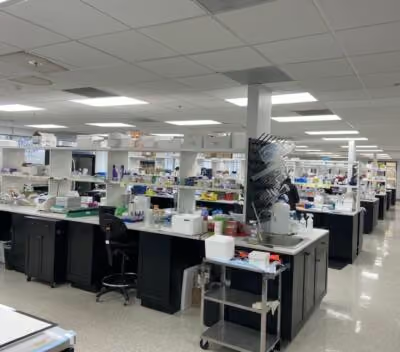
The new In Vitro Biology Laboratory being established at Greater Noida will sit alongside chemistry operations. It is designed to support compounds synthesized on site as well as integrated programs in which chemistry and biology need to iterate closely.
The laboratory will include multiple plate readers, acoustic liquid handling and dedicated cell-culture laboratories. It will support biochemical assays using absorbance, fluorescence and luminescence readouts, as well as cell-based primary and functional assays across therapeutic areas. The intended result is more than added assay capacity: it is a shorter operational path from a design decision to biological evidence.
Matching ADME throughput to discovery demand
Biological activity is only one part of a compound's profile. ADME data often determines which series should advance, which liabilities need to be designed out and where chemistry teams should focus the next cycle. If testing cannot keep pace with compound generation, that feedback arrives too late to guide the work efficiently.
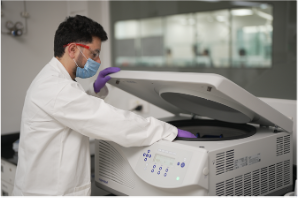
The upgraded Greater Noida DMPK facility now operates as a semi-automated, high-throughput ADME screening platform. It can process up to 1,500 ADME assays per week, with a typical turnaround time of approximately 72 hours. Its portfolio includes kinetic solubility, LogD, microsomal and hepatocyte stability, CYP inhibition, plasma protein binding and MDCK permeability.
Automated liquid handling streamlined sample preparation and high-sensitivity LC-MS/MS systems reduce manual touchpoints while supporting reproducibility, traceability and consistent reporting. For project teams, the practical benefit is earlier access to comparable data across larger compound sets, from hit identification through lead optimization.
Making compound management the operational backbone
High-throughput platforms depend on an often less visible capability: disciplined compound management. Without reliable registration, storage, inventory control and plate preparation, faster instruments can simply move the bottleneck upstream.
The integrated Compound Management Facility at Greater Noida centralizes compound registration, inventory tracking, controlled storage, stock-solution preparation and assay-ready plate generation. A compound-management system and barcode-based workflows are designed to maintain chain of custody and make each sample easier to locate, prepare and trace.
That foundation matters at scale. Standardized preparation and digital tracking can help reduce avoidable variation between assays, support repeat testing and provide a clearer record connecting a result to the compound and sample that produced it.
Building for the Next Generation of Discovery
Beyond the capabilities being established today, Jubilant Biosys is continuing to invest in the next generation of discovery infrastructure. The following initiatives represent planned expansions designed to enhance speed, scientific connectivity and decision-making across future discovery programs.
Advancing High-Throughput Experimentation
Jubilant Biosys has announced plans to install the Mettler Toledo CHRONECT™ XPR robotic dispensing platform to support high-throughput experimentation (HTE) in discovery chemistry and process R&D. The system will automate powder and liquid dispensing, enabling faster reaction screening, optimization studies, parallel synthesis workflows and more efficient use of valuable compounds. By reducing manual effort and improving reproducibility, it will help accelerate data-driven decision-making.
Expanding In Vivo Research Capabilities
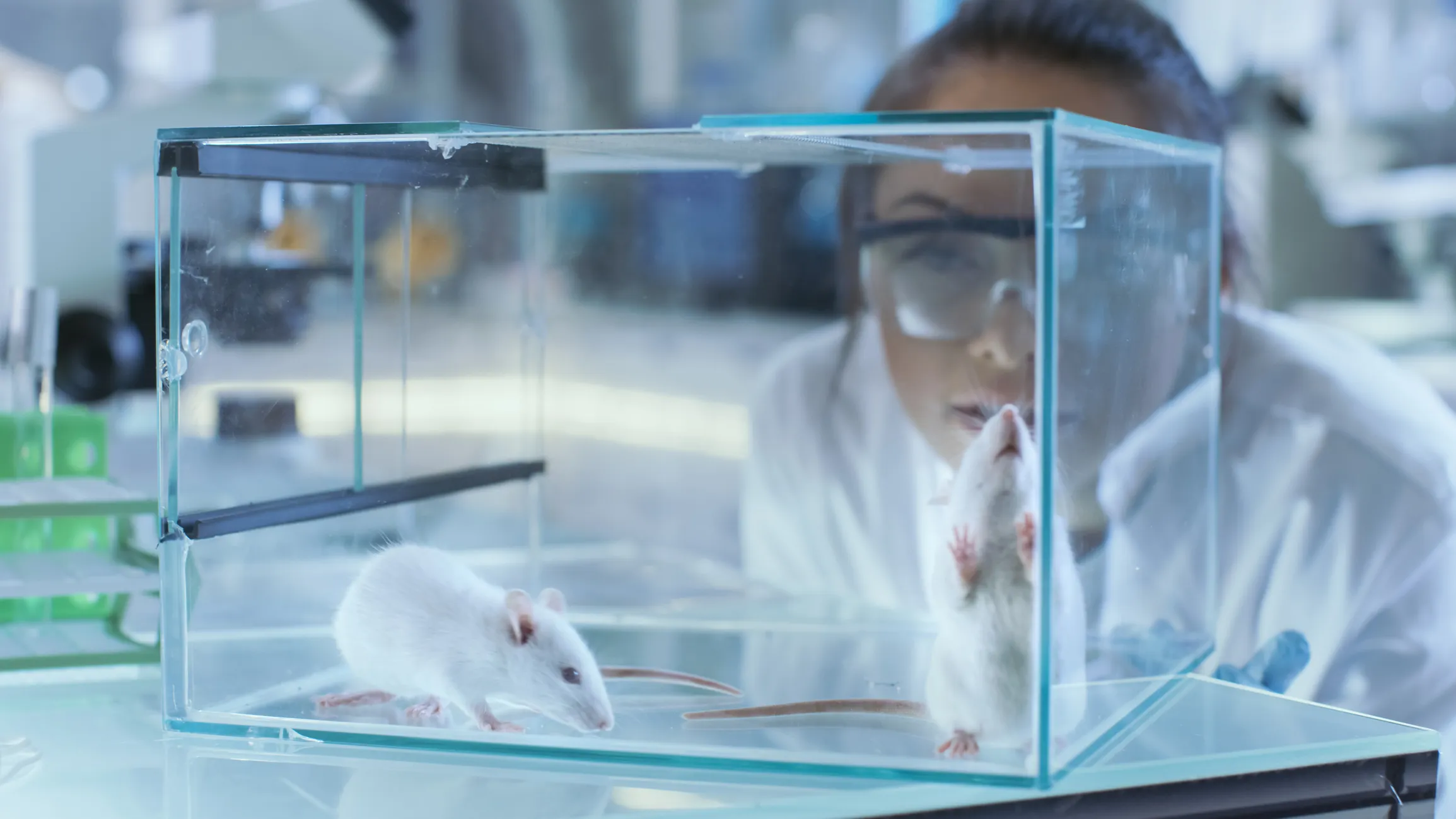
An upcoming Animal Research Facility at Greater Noida will be designed to meet both CCSEA and AAALAC standards, supporting PK, PK-PD, efficacy and toxicology studies. Integrated with medicinal chemistry, in vitro biology, ADME-PK and toxicology teams, the facility will strengthen cross-functional collaboration and accelerate progression from discovery to candidate selection.
Broadening Chemistry Technology Platforms
Jubilant Biosys is also investing in photoflow chemistry capabilities to expand the range of synthetic approaches available to its research teams. By combining continuous-flow processing with photochemistry, the technology can enable efficient reaction optimization, route exploration and access to novel chemical space. This addition further strengthens the organization's integrated discovery infrastructure and innovation capabilities.
From individual sites to an integrated scientific system
Taken together, these capabilities show integration at different levels. Bengaluru provides the established program-delivery model and accumulated IDD experience. France adds biologics discovery expertise. Greater Noida extends the connected infrastructure for chemistry, biology, ADME and compound management.
A compound synthesized at Greater Noida can be registered and prepared through a centralized facility, directed into biochemical or cell-based testing, evaluated through a broad ADME panel and returned to project teams as evidence for the next design cycle. The same principle that has shaped integrated delivery in Bengaluru is being applied to new capacity: connect the science around the decision the program needs to make next.
Drug discovery will continue to become more data-intensive, multidisciplinary and modality-diverse. The organizations best positioned to navigate that complexity will not necessarily be those with the longest equipment lists, but those that connect people, samples, instruments and data into an efficient learning cycle.
Jubilant Biosys' current investments build on what the organization has already learned through integrated delivery. The emphasis is not technology for its own sake, but a scientific system designed to help teams turn each round of experimentation into a better-informed next step.
Explore Jubilant Biosys on Scientist.com to learn more about its integrated drug discovery capabilities and available services.

Take the Next Step
Explore Suppliers
Browse trusted partners with relevant expertise
Review Capabilities
Compare services, experience, and past work
Start Your Project
Connect and begin collaborating
Sponsor


.png)

.jpg)
.png)
.avif)


.avif)