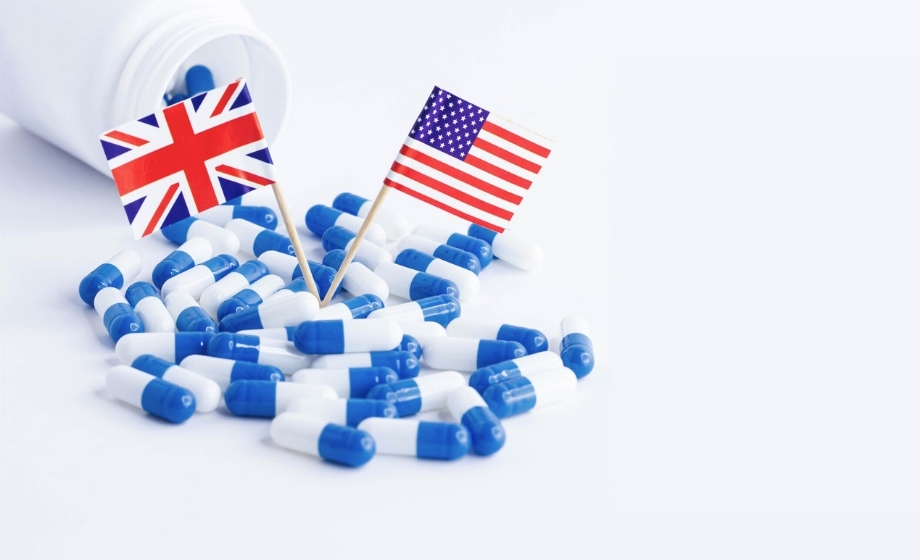
The United States and United Kingdom have finalized a landmark agreement that fundamentally reshapes pharmaceutical trade, drug pricing, and market access across both nations. Marketed by the UK government as a “life sciences investment catalyst” and by the U.S. as a strategic alignment of pricing expectations, the deal eliminates tariffs on UK medicines entering the U.S. while committing the UK to higher spending on innovative therapies and major changes to its drug value assessment framework.
Though branded as a win-win for innovation and access, the implications are far-reaching—touching everything from global pricing dynamics and Quality-Adjusted Life Year (QALY) benchmarks to future investment pipelines, reimbursement frameworks, and HEOR evaluation standards. This agreement represents a rare intersection of trade policy, pricing reform, patient access, and industrial strategy.
Here is an analysis of what the deal actually does, and what it means for pharma, payers, and patients in both countries.
Tariff-Free Access and Supply Chain Stability
At the heart of the trade component is a foundational benefit: the U.S. will apply a zero percent tariff on UK pharmaceuticals, APIs, and medical technology for at least three years. This provision makes the UK the only country globally with guaranteed tariff-free access to the U.S. pharma market.
This is critical for the UK economy, as the U.S. is its largest export market, with pharmaceuticals representing approximately 20% of UK exports to the U.S. By removing tariffs, the deal protects UK manufacturing margins and significantly increases competitiveness relative to EU and Asian producers. Furthermore, it serves to stabilize cross-Atlantic supply chains that have been strained by recent geopolitical and post-pandemic disruptions, incentivizing major players like Moderna, BioNTech, and AstraZeneca to maintain or expand operations within the UK.
The Cost of Access: A Shift in UK Pricing
To secure this tariff-free access, Britain has agreed to a significant concession: raising the net prices it pays for new U.S. medicines by roughly 25%. This increase is not a flat fee but is engineered through structural reforms to the National Institute for Health and Care Excellence (NICE) framework.
The reforms include:
- Raising the cost-effectiveness threshold: The threshold moves from the traditional £20k–£30k per QALY to a new range of £25k–£35k per QALY.
- A new "value set": NICE will adopt a new health-related quality-of-life framework for evaluations.
Together, these changes make it easier for new medicines—especially high-cost, high-value therapies—to clear the NICE hurdle that previously failed on cost grounds. While this will inevitably increase the budget impact for the NHS, it positions the UK as a more attractive early-launch market and secures early access for patients with rare diseases, oncology needs, or refractory conditions. This marks the first major rise in UK medicines investment in two decades.
Navigating the "Most Favored Nation" Trap
A crucial, often overlooked aspect of the deal involves the U.S. "Most Favored Nation" (MFN) pricing model, which aims to align U.S. drug prices with those paid in other wealthy nations. The UK has secured exemptions ensuring that MFN policies will not limit U.S. drug availability in Britain or penalize UK pricing structures.
Without these exemptions, U.S. manufacturers might have delayed or avoided UK launches entirely to protect their U.S. price points, fearing that the UK’s typically lower prices would set a damaging benchmark. With these mitigations in place, Britain becomes a viable option for early drug launches rather than a liability to global pricing strategies.
Accelerating Approvals and Stabilizing the Market
Beyond pricing, the agreement addresses the operational speed of the NHS and the regulatory environment. UK clinical trial approval timelines have already seen a dramatic reduction from 91 to 41 days. Furthermore, NICE will now consider a wider set of value measures, including those tied to real-world quality-of-life preferences.
The government estimates that tens of thousands of NHS patients will gain earlier access to treatments, particularly in oncology and immunotherapy. Simultaneously, the UK is addressing industry frustration regarding the voluntary pricing scheme (VPAG). The payment/rebate rate will be reduced to 15% in 2026, offering relief from the soaring rebate rates of recent years. This combination of faster approvals, lower rebates, and higher QALY thresholds signals a move toward a much more stable, innovation-friendly market environment.
A Resurgence in Life Sciences Investment
The industry response has been immediate. Major statements from companies such as Bristol Myers Squibb, Moderna, and BioNTech indicate a renewal of UK investments. Bristol Myers Squibb alone anticipates $500M in new UK investments over five years as a direct result of these commitments.
The deal effectively reverses a trend of declining investment caused by unpredictable rebate schemes and a challenging NICE environment, encouraging companies to strengthen their manufacturing footprints and expand R&D programs within the UK.
Global Ripple Effects: HEOR and International Pricing
This agreement creates a new precedent in global Health Economics and Outcomes Research (HEOR). By aligning trade policy with Health Technology Assessment (HTA) policy, the deal establishes a higher price anchor in the UK. This could influence global reference pricing, shifting the UK's position in international price corridors and potentially strengthening pricing arguments in neighboring European markets.
For manufacturers, this leads to greater predictability in the HTA pathway, including higher acceptance rates and a lower risk of late-stage rejection. It also positions the UK as a prime destination for generating Real-World Evidence (RWE) and post-launch data.
The U.S. Strategic Perspective
From the American viewpoint, this deal is a strategic victory. It pushes the UK to pay more for innovative therapies—a long-standing U.S. priority aimed at "sharing the burden" of innovation. It demonstrates global alignment with U.S. trade goals to normalize drug prices across wealthy markets and strengthens the argument for MFN pricing by securing concessions from a major partner. Ultimately, it builds a template the U.S. can use in future negotiations with the EU, South Korea, Australia, and Japan.
Final Takeaway: A Strategic Reset
This agreement represents a comprehensive reset of the UK’s role in global life sciences. For the UK, it secures vital supply chains, boosts domestic investment, and opens the door to faster patient access. For the U.S., it marks significant progress in global drug pricing negotiations. And for global pharma, it increases predictability, raises the UK’s price anchor, and encourages earlier launches.

Take the Next Step
Explore Suppliers
Browse trusted partners with relevant expertise
Review Capabilities
Compare services, experience, and past work
Start Your Project
Connect and begin collaborating
.png)

.jpg)





.png)
.avif)





.avif)