This blog post was adapted from an article written by Nina Culum , MSc, and originally published by InsideScientfic .
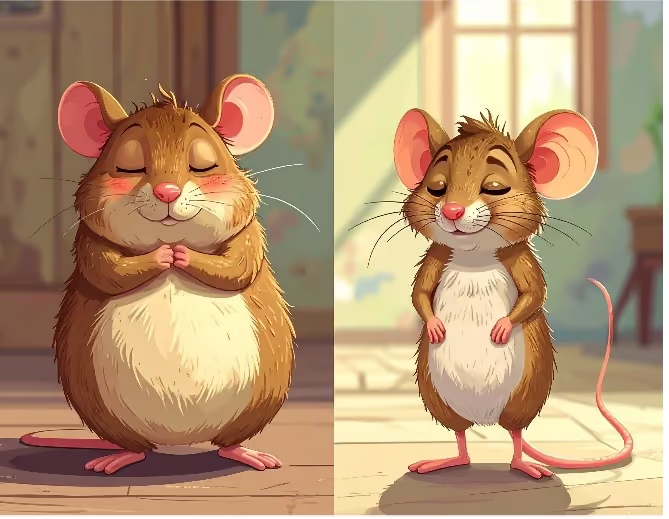
The global prevalence of obesity has nearly tripled since 1975 and, based on current trajectories, more than half of American adults are projected to be obese by 2030. 1, 2 Left untreated, individuals with obesity are at an increased risk of developing many serious diseases and health conditions including hypertension, type 2 diabetes, cardiovascular disease, and musculoskeletal disorders. 3 Depending on its duration, obesity is also associated with a 5-20 year decrease in life expectancy. 1 In addition to these health consequences, obesity poses a great financial burden; more than $190 billion is spent annually in the United States to treat obesity-related diseases. 4
Figure 1: The three paradigms of weight loss and management for obesity treatment.
The fundamental cause of obesity is an energy imbalance between calories consumed and expended. Obesity is increasingly being recognized as a chronic, degenerative disease rather than just a risk factor for other noncommunicable diseases, which serves to destigmatize obesity and counter the belief that it results from insufficient self-discipline or “laziness”. 4 Research has suggested that there is a distinct pathophysiology that leads to excess fat accumulation as well as homeostatic mechanisms that challenge weight loss and exacerbate weight gain. 4 If preventative measures (e.g., diet and physical activity) fail or are not accessible, individuals can seek treatment for obesity in the forms of behavioral, pharmacological, and/or surgical interventions (Figure 1).
Topics covered in this article include:
Current Obesity Treatments and Their Limitations
The Need for Animal Models
Emerging Anti-Obesity Pharmacological Treatments
How Columbus Instruments has Advanced Preclinical Obesity Research
To read the full article, visit InsideScientific’s blog .
References World Health Organization [Internet]. Obesity and overweight; 2021 Jun 09 [cited 2022 Feb 24]. Available from: https://www.who.int/news-room/fact-sheets/detail/obesity-and-overweight. Kleinert M, Clemmensen C, Hofmann SM, Moore MC, Renner S, et al. Animal models of obesity and diabetes mellitus. Nat Rev Endocrinol. 2018;14(3):140-62. DOI: 10.1038/nrendo.2017.161. Centers for Disease Control and Prevention [Internet]. Adult obesity causes & consequences; 2021 Mar 22 [cited 2022 Mar 02]. Available from: https://www.cdc.gov/obesity/adult/causes.html. Müller TD, Blüher M, Tschöp MH, DiMarchi RD. Anti-obesity drug discovery: advances and challenges. Nat Rev Drug Discov. 2021. DOI: 10.1038/s41573-021-00337-8. Online ahead of print.

Take the Next Step
Explore Suppliers
Browse trusted partners with relevant expertise
Review Capabilities
Compare services, experience, and past work
Start Your Project
Connect and begin collaborating
Sponsor

.png)

.jpg)




.png)
.avif)


.avif)