Human Immune Cells in New Approach Methodologies (NAMs)
As drug development moves toward more human-relevant, non-animal models, the cells used within those models become increasingly important. For researchers developing cell therapies, combining advanced model systems with human immune cells offers new ways to evaluate therapeutic activity and potential off-target effects.
On September 21, 2026, the Food and Drug Administration (FDA) issued its final rule on new approach methodologies (NAMs). Non-animal methods will now be evaluated on equal footing with traditional in vivo animal studies, based on their appropriateness and scientific validation. FDA guidance will reflect this shift by referring broadly to nonclinical studies rather than distinguishing between in vivo and in vitro approaches.
This action advances newer methods that may have been overlooked because established approaches were perceived as preferred by the FDA. By encouraging innovation, the new rule also supports the FDA’s long-standing goal of reducing and replacing animal models.
Example of a NAM
The FDA’s New Approach Methodologies (NAMs) Database of Use Case Examples highlights practical applications of these methods. One example is the human Cell Line Activation Test (h-CLAT), which uses monocytic cells to measure increased expression of activation markers. This test predicts dendritic-cell activation in response to a test article and can replace in vivo skin-sensitization testing when used in concert with other nonclinical methods.
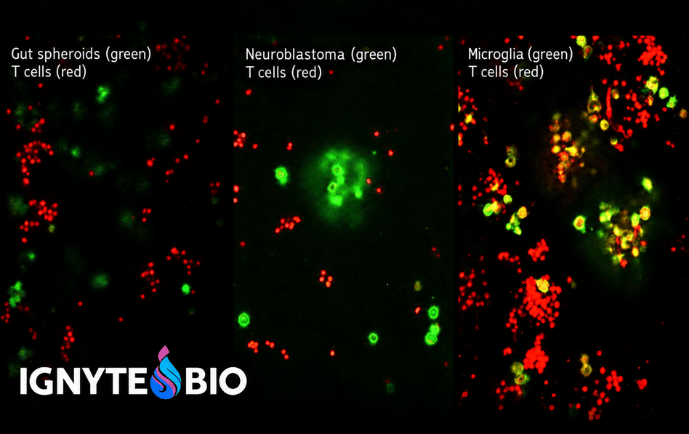
Confocal Z-stack (Day 10) , 44 µm in 41 Z-slices , CEA+ Target tumor, (CEA -specific CD8+T cells) Effector: Target (CEA+ target tumor)= 2:1
How Ignyte Bio cells can be used in NAM studies
Ignyte Bio’s normal human immune cells are well suited to NAMs, particularly for cell therapy development. By combining human immune cells with advanced model systems, researchers can evaluate cell behavior and therapeutic effects in environments designed to more closely mimic human biology.
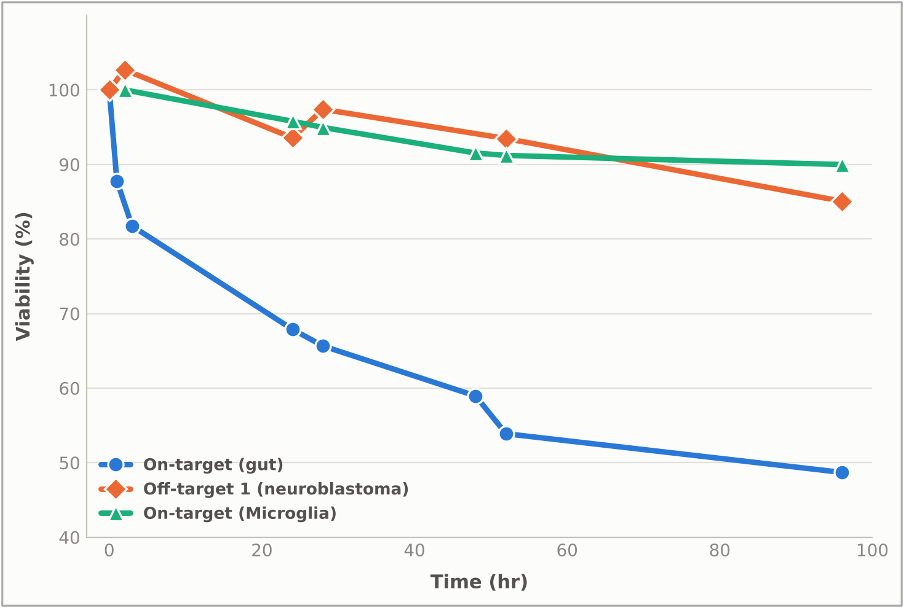
Using OrganRX™ technology, Ignyte Bio’s anti-CEA antigen-specific T cells were assessed for both on-target and off-target cytotoxicity (AACR Annual Meeting, Abstract #6548).
OrganRX™ enables evaluation in an environment that mimics in vivo conditions. Combining organ-on-a-chip technologies like OrganRX™ with novel human immune cells offers a powerful approach to developing and testing cell therapies.
Interested in exploring how Ignyte Bio’s human immune cells could support your NAM studies? Let us help you.
For a complete list of Ignyte Bio's Antigen specific T cells, click here.

Take the Next Step
Explore Suppliers
Browse trusted partners with relevant expertise
Review Capabilities
Compare services, experience, and past work
Start Your Project
Connect and begin collaborating
Sponsor