
Donor-specific factors such as age, sex, ethnicity, disease state, medical history, and treatment history can all influence your experimental outcomes. While this biological diversity is one of the greatest strengths of primary cells, particularly when compared to immortalized cell lines, it also makes careful donor selection essential for designing robust and reproducible experiments. Equally important is working with a supplier that provides transparent donor information, maintains high standards for ethical sourcing, and follows rigorous quality and regulatory practices.
The success of your research depends on more than selecting the right cell type—it starts with selecting the right donor and the right supplier.
Traditionally, researchers purchasing primary cells have relied on a Certificate of Analysis (CoA) to understand product quality. While CoAs remain an important quality document, today's research often requires a deeper understanding of donor biology. As assays become more sophisticated and regulatory expectations continue to evolve, access to comprehensive donor metadata is increasingly needed to decide which starting material is right for your research.
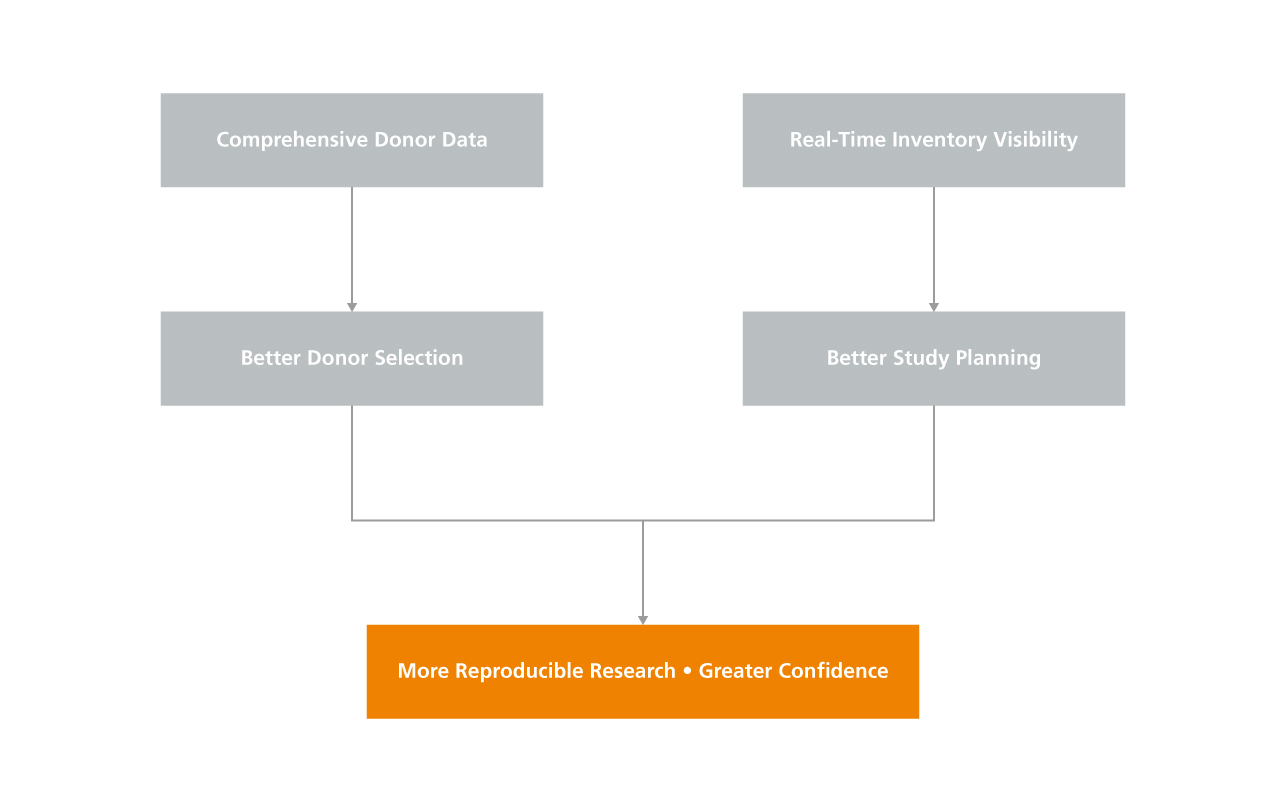
Detailed donor information allows you to build well-defined donor pools, select donors with specific clinical and demographic characteristics, and minimize biological variability. Together, these capabilities support more consistent study design, improved reproducibility, and greater confidence when translating findings from discovery to validation. At the same time, understanding how donor material is sourced and documented helps ensure your research is built on responsibly collected, well-characterized biological materials.
What information should you expect before purchasing human primary cells?
Choosing the right human primary cells starts with having access to the right information. Depending on your application, you may need to consider donor characteristics such as age, sex, ethnicity, disease diagnosis, body mass index (BMI), medication history, blood type, serology status, HLA type, CMV status, or other clinically relevant attributes. This information helps you determine whether a donor is appropriate for your study and allows you to build well-defined donor cohorts that support experimental reproducibility.
In addition to the donor information above, you should also expect visibility into product availability and pricing. Access to this information—without unnecessary delays—before purchasing enables you to compare donor options, assess inventory for current and future studies, and make informed decisions.
Your human primary cell supplier should provide the transparency you need to evaluate donor suitability before selecting a product—not after.
What are the advantages of having early access to donor information and inventory?
Early access to donor information and inventory availability support better study design, reduce procurement uncertainty, and streamline your research workflow.
- Improve Experimental Reproducibility: Access to detailed donor information helps you build representative donor cohorts with characteristics relevant to your research. Selecting donors with the appropriate clinical and demographic characteristics supports more reproducible results and increases confidence in your findings.
- Plan Studies with Greater Confidence: Visibility on real-time inventory allows you to confirm product availability, identify sufficient material for larger or longitudinal studies, evaluate alternative donor options, and proactively plan future experiments.
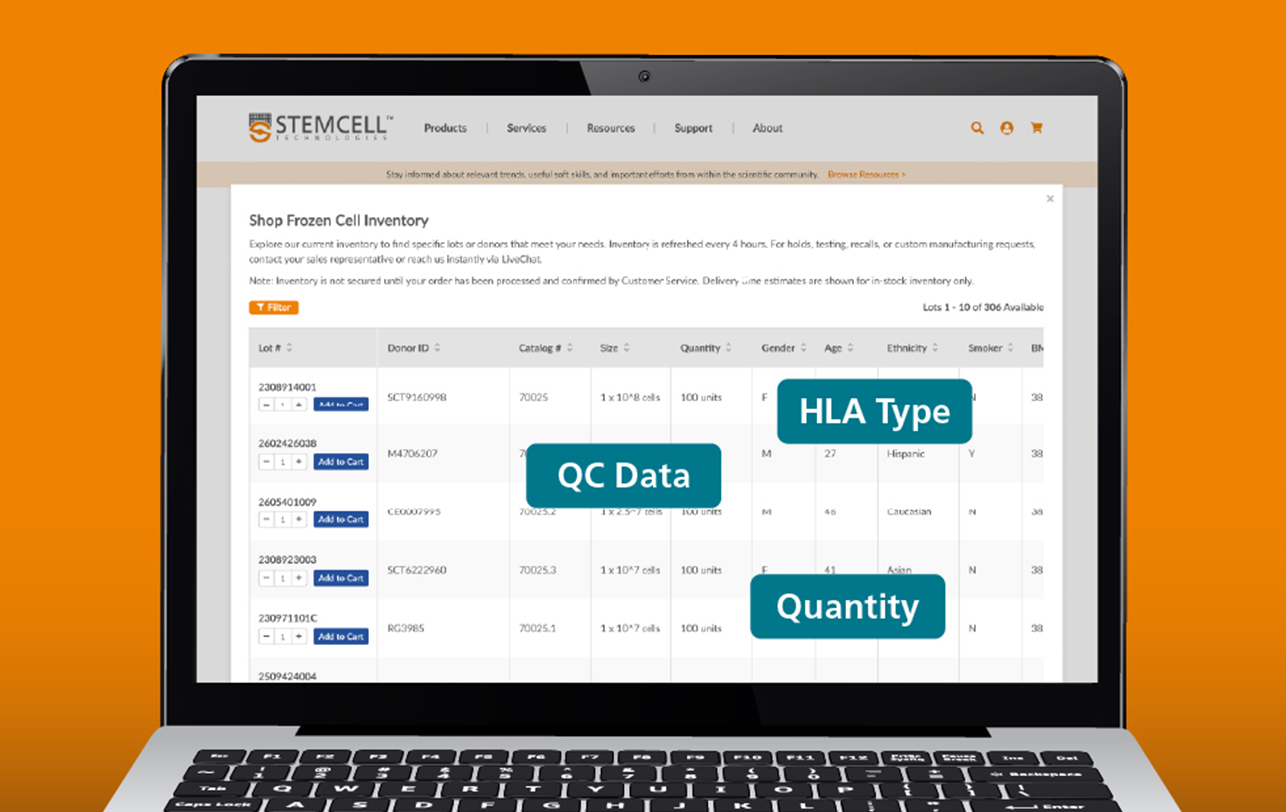
- Work More Efficiently with Self-Service Access: Easy access to donor information allows you to independently search inventory, compare products, and identify materials that meet your research requirements. By displaying donor characteristics, inventory availability, and pricing in one place, self-service tools simplify procurement while ensuring scientific support remains available when you need it.
Why should you consider ethical sourcing and regulatory compliance when choosing a human primary cell supplier? How should a human primary cell supplier support regulatory compliance and ethical sourcing?
Beyond donor suitability, it is important to understand how primary cells are collected and documented. Choosing a supplier that follows rigorous ethical and regulatory practices can help you meet institutional requirements and support responsible research. Learn more about STEMCELL's approach on our website.
When evaluating a primary cell supplier, you should consider whether they:
- Obtain donor samples using informed consent under protocols approved by an Institutional Review Board (IRB), Research Ethics Committee (REC), or equivalent regulatory authority.
- Collect human tissues in accordance with applicable local, national, and international regulations.
- Protect donor privacy by providing anonymized donor information without revealing personally identifiable information.
- Screen donors according to established infectious disease screening policies, where applicable.
- Provide documentation, such as quality and compliance statements, to support your institutional or regulatory requirements.
How can digital tools simplify human primary cell selection?
Finding the right donor shouldn't require multiple emails, inventory checks, or quotation requests. Digital tools can make the selection process more efficient by bringing relevant product information into one place.
With STEMCELL's Donor Inventory Tool1 for cryopreserved human primary cells2, you can search available inventory and review donor characteristics, including HLA type, CMV status, and ethnicity. Product information such as purity, viability, and batch size can help you compare options and assess their suitability for your experiments.
The tool also provides inventory visibility and access to online ordering, making it easier to select materials that meet your research requirements.
How can your primary cell supplier support your research beyond cell procurement?
Selecting the right donor is only the first step in building a successful primary cell workflow. Optimized reagents and protocols for cell isolation, culture, activation, expansion, and downstream applications are also important for generating consistent results.
STEMCELL Technologies provides workflow solutions that complement our human primary cell products. T cells, B cells, NK cells, dendritic cells, or macrophages, our ImmunoCult™ cell culture reagents, cytokines, and recombinant proteins can help establish reliable culture conditions. For researchers developing cell therapies, our ImmunoCult-XF™ media and GMP ImmunoCult™ T Cell Activators support robust T cell activation and expansion under defined, scalable conditions.
Why does your choice of supplier matter?
Choosing a human primary cell supplier means finding a partner that can support your research beyond the initial purchase. A dependable supplier should provide comprehensive donor characterization, real-time inventory visibility, ethical sourcing and regulatory compliance, intuitive digital tools, scientific expertise, and workflow solutions.
STEMCELL Technologies is committed to helping you find the right human primary cells that are ethically sourced and approved for use in your application. Along with a broad inventory of fresh or frozen human primary cells2, we also provide integrated workflow solutions—including immunomagnetic cell isolation kits, cell culture media, cytokines, recombinant proteins, and technical expertise—to help you optimize cell isolation, culture, activation, expansion, and downstream applications. Our scientific support team is also available to help you identify the most appropriate products for your application, ensuring you have both the information and expertise needed to advance your research. Whether you're developing functional immune assays, advancing cell therapy research, or building physiologically relevant in vitro models, our goal is to provide the products, information, and scientific support you need to make informed decisions and generate reproducible results. To learn more, visit www.stemcell.com.
1The Donor Inventory Tool is available for nearly all cryopreserved human primary cell products, including cryopreserved leukopaks, PBMCs, isolated immune cell subsets, mobilized mononuclear cells (MNCs) and CD34+ cells, bone marrow MNCs and CD34+ cells, and selected diseased-state PBMCs. The inventory data is updated approximately every four hours. HLA information is available only for products and batches where the donor has provided explicit consent for genomic sequencing and public display.
2Certain products are only available in select territories. Please contact your sales representative or our primary cells team for further information.

Take the Next Step
Explore Suppliers
Browse trusted partners with relevant expertise
Review Capabilities
Compare services, experience, and past work
Start Your Project
Connect and begin collaborating
Sponsor